
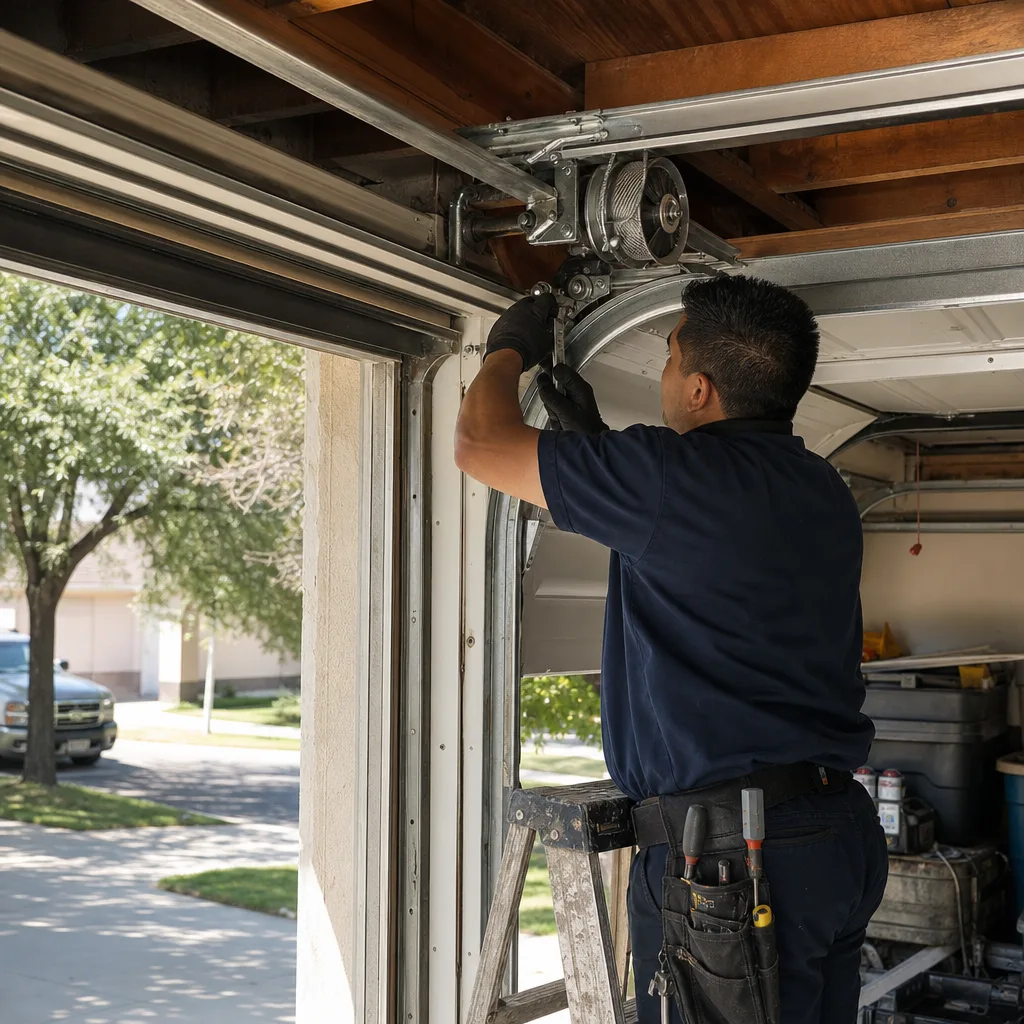
Last updated October 16, 2026
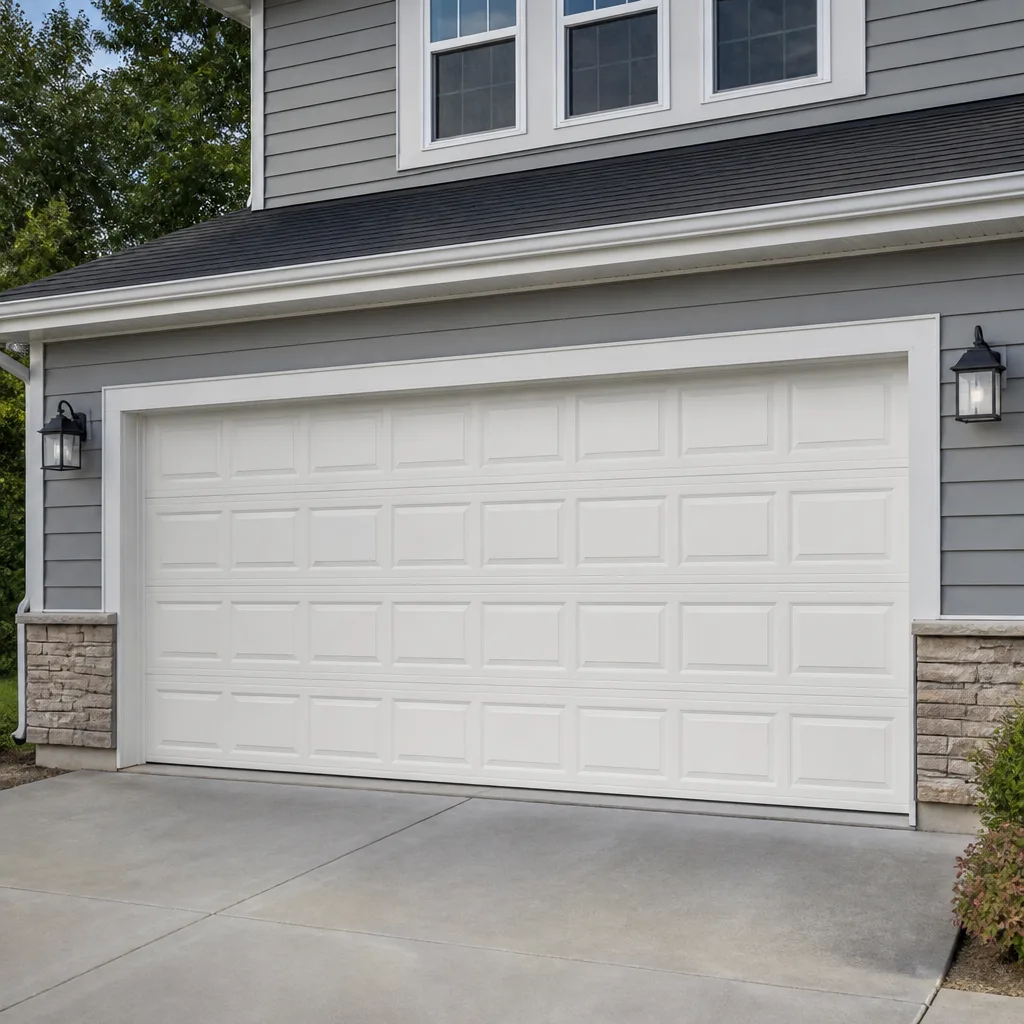 Raised-panel steel
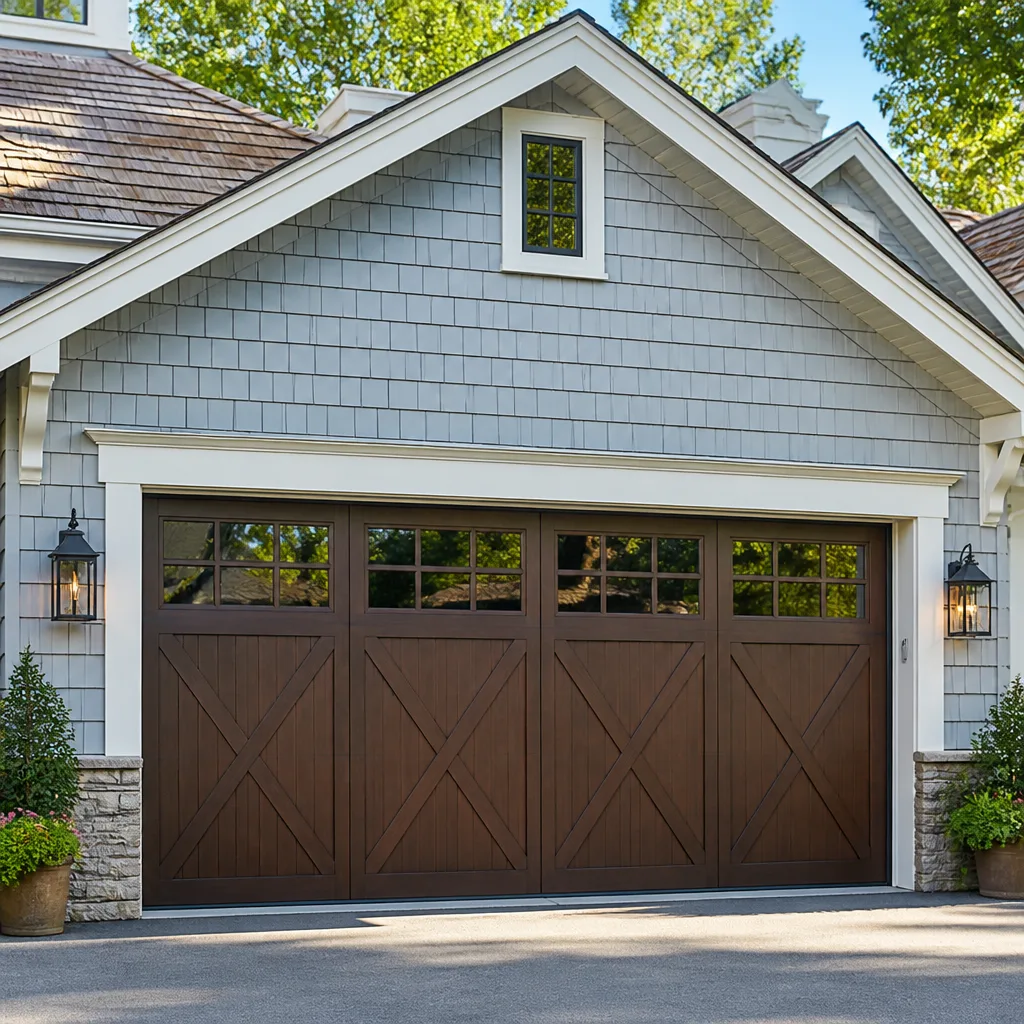 Carriage house
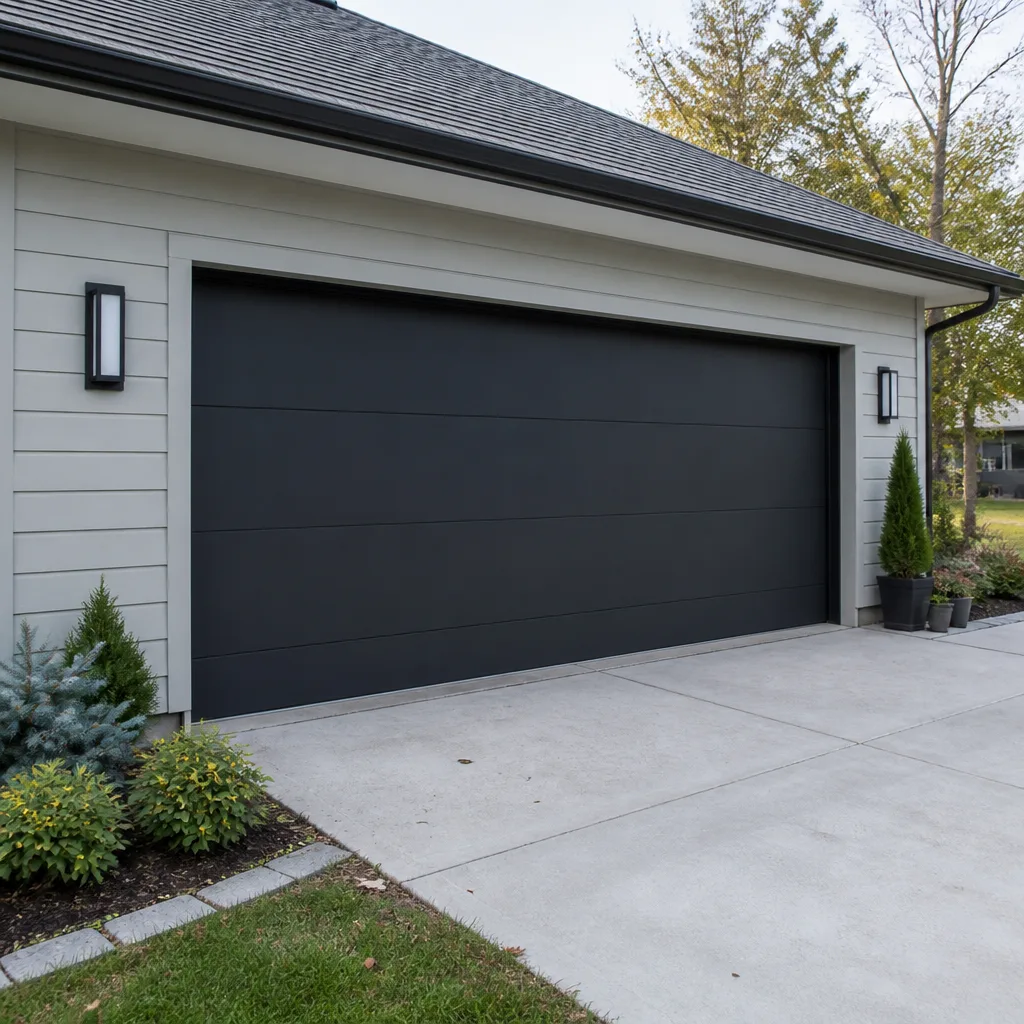 Modern flush
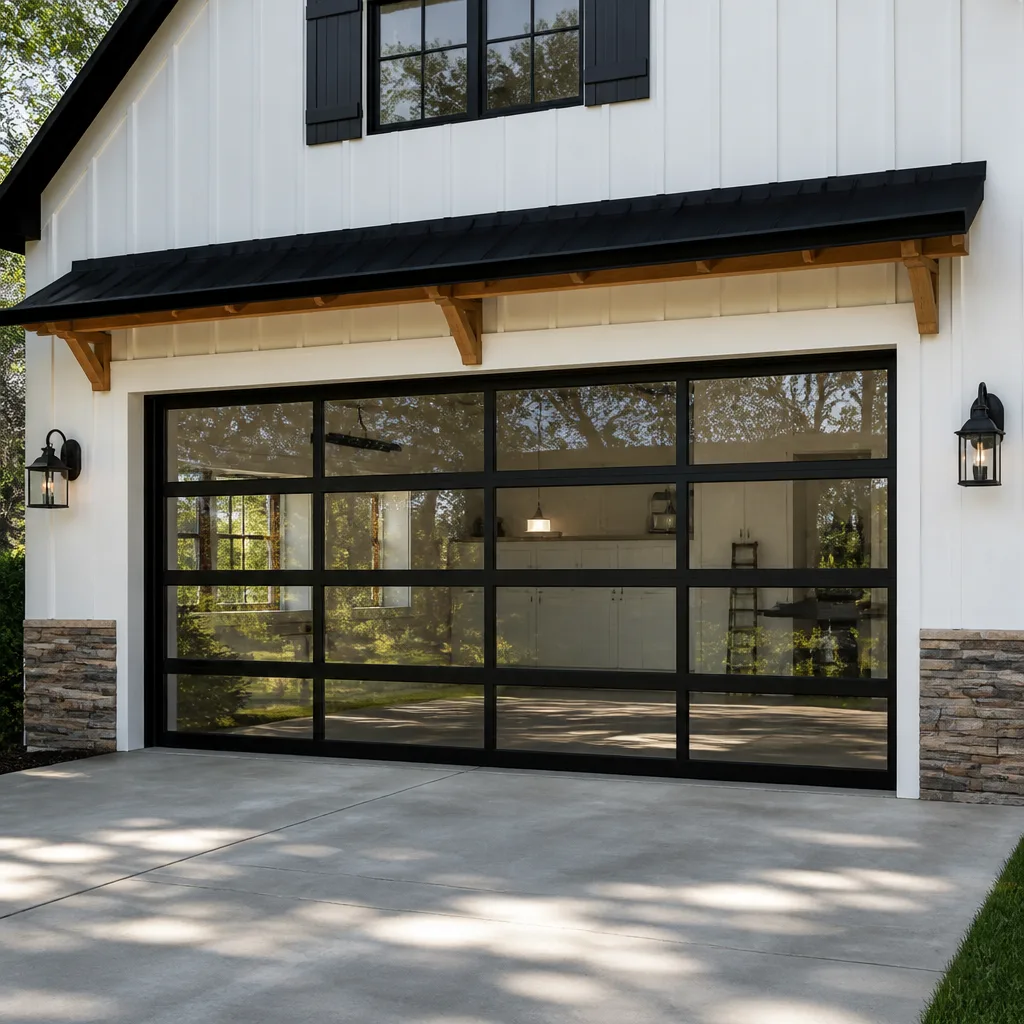 Full-view glass
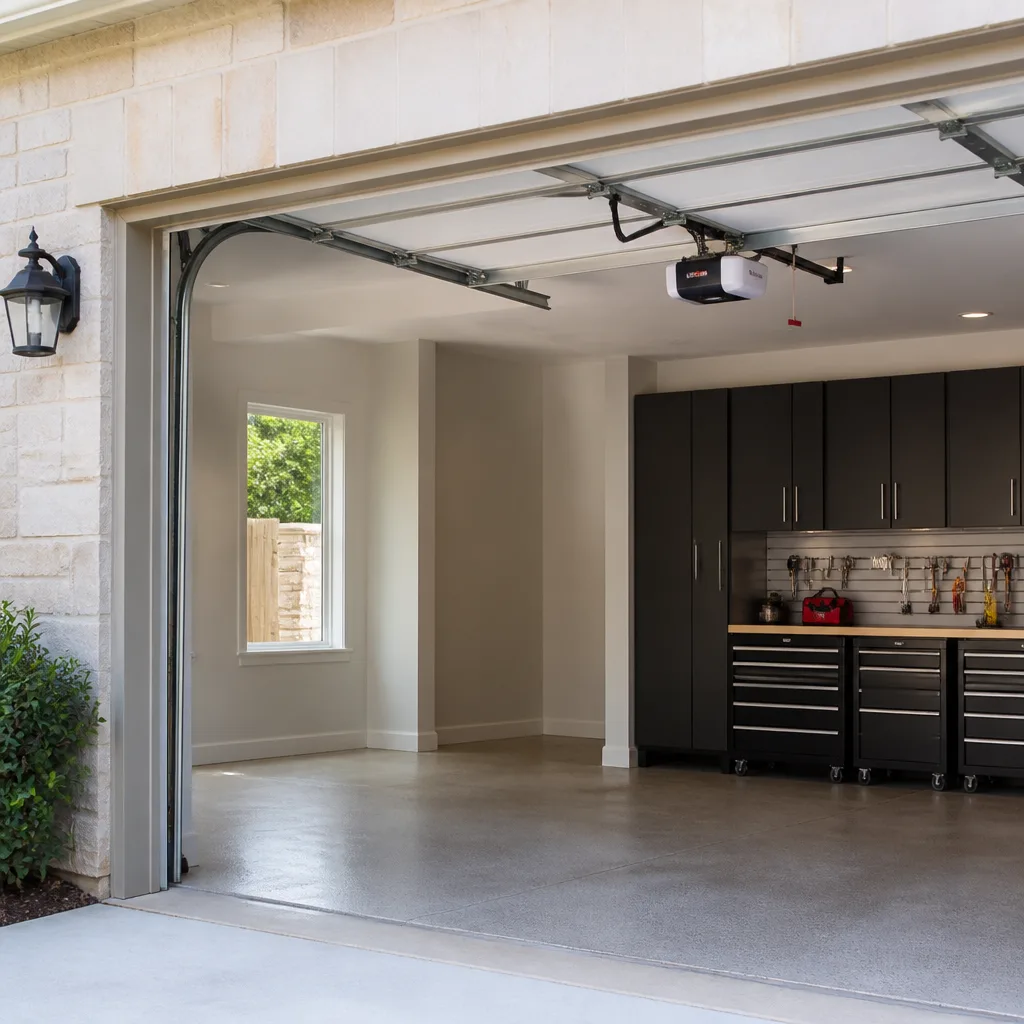 LiftMaster openers
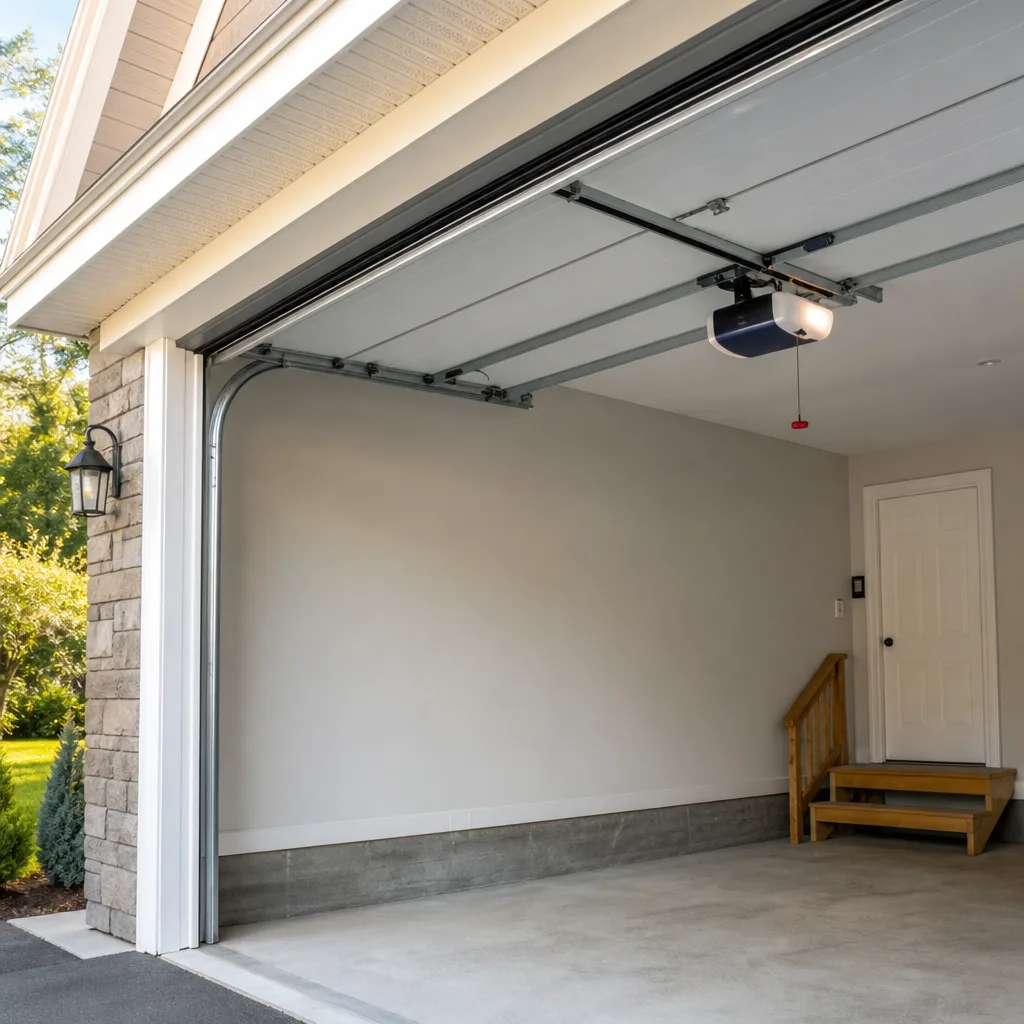 Chamberlain openers
Full 25-point door and opener safety check with every visit - springs, cables, rollers, tracks, and your LiftMaster or Chamberlain opener included
You get a price before we start. It does not change when the truck arrives.
Get your free estimateGarage Door Warning Signs: A San Antonio Homeowner’s Reference Guide
A garage door that takes two seconds longer to start moving than it did last month is telling you something specific, and it’s not “it’s just getting old.” That hesitation has a name, a cause, and a repair cost that’s about to triple if you wait. Most San Antonio homeowners replace doors and springs only after catastrophic failure, but our techs see the early warnings daily, and the pattern is always the same: small signals ignored for six months become $400 repairs that could have been $80 fixes. This guide is the reference we wish every homeowner in San Antonio had before picking up the phone, and you can find more guides & resources on our blog.
Quick Answer
The most common garage door warning signs in San Antonio are a 2-3 second hesitation before the door starts moving, grinding at the top of travel, a door that stops 6 inches short of fully closed, and a remote that works outside the garage but not inside. Each of these is a specific, diagnosable condition, and most cost under $150 to fix if addressed within 30 days of first noticing them. Misting, oil streaks on the track, or a visibly separating torsion spring are the signs that mean stop using the door and call a pro same day.
Styles & brands we work with
Table of Contents
- The Symptom-to-Cause Decoder: What Your Door Is Actually Saying
- Why San Antonio Wears Garage Doors Differently
- Monitor It or Stop Using the Door: The Two Category System
- Torsion Springs: The One Warning Sign That Is a Same-Day Emergency
- How to Document Warning Signs With Your Phone Before You Call
- What Each Warning Sign Costs to Fix in San Antonio
- Brand-Specific Warning Patterns: LiftMaster, Chamberlain, Craftsman, and Raynor
- Homeowner Misdiagnoses We See Every Week
The Symptom-to-Cause Decoder: What Your Door Is Actually Saying
Every warning sign maps to a specific mechanical cause. Here is the decoder we use on service calls across San Antonio. If you recognize one of these, you have already narrowed the problem down to one or two components, which means you can get a realistic price range before a tech even arrives.
The 2-Second Hesitation on Open
You press the button, hear the motor click, and nothing moves for a beat or two. Then the door lurches upward. That pause is almost always the opener’s start capacitor losing its ability to deliver the initial surge of power. The capacitor is a $15-30 part. If you replace it now, the repair is typically under $120 total. Ignore it for a few months, and the opener motor burns out trying to start under load, turning a $120 repair into a $350-500 opener replacement.
Grinding at the Top of Travel
A grinding sound that peaks just as the door reaches the fully open position points to dry or worn rollers on the curved track section. The top curve is where rollers carry the most lateral load, so that is where wear becomes audible first. In San Antonio, this wear accelerates near construction corridors like 1604 and 281, where limestone dust coats the track and creates a grinding compound. A set of nylon rollers runs $80-120 installed. Left unaddressed, worn rollers eat the track itself, and track replacement starts around $200.
The Door Stops 6 Inches Short
This one trips a lot of people up because the door “almost” closes. When a garage door stops consistently 4-6 inches from fully closed and then reverses, the problem is almost always the safety sensor alignment or the limit switch settings. But sometimes it is the door’s balance: a door that has lost one spring’s tension will not hold its full closed position. To check which one you have, pull the emergency release cord when the door is halfway open. If the door stays put, the balance is fine and it’s a sensor or limit issue. If the door drops, you have a spring problem, and that changes everything about urgency and cost.
Remote Works Outside, Not Inside the Garage
This sounds like a remote problem, but it is usually interference. LED bulbs installed in a garage door opener create radio frequency noise on the same band the remote uses. The walls of a San Antonio garage, especially in older limestone or stucco homes in Alamo Heights or Terrell Heights, block the weaker signal from inside. Swap the LED bulb for an opener-rated bulb first; that fixes it about 70% of the time at zero cost. If it persists, the opener’s logic board may be failing, and that is a real repair decision.
Why San Antonio Wears Garage Doors Differently
A garage door in San Antonio does not age the way a garage door in Dallas or Houston does. Three local factors change the wear pattern enough that generic online advice misses the mark, which is why we put together Seasonal Garage Door Care for San Antonio: Year-Round Homeowner’s Guide.
Limestone dust and construction corridors. The 1604 and 281 expansion zones generate fine limestone particulates that settle on overhead door tracks and rollers. Limestone dust is mildly abrasive. When it builds up on a nylon roller’s bearing, it grinds the bearing surface, which creates the “grinding at the top of travel” symptom described above. In neighborhoods like Stone Oak, Cibolo, and far west San Antonio, we see roller wear at 5-6 years that would take 8-10 years in a cleaner environment.
Heat cycling on springs. San Antonio’s summer heat pushes garage temperatures past 110°F on a regular basis. Each heat cycle expands and contracts the torsion spring’s steel coils at the molecular level. Springs are rated for 10,000 cycles regardless of geography, but San Antonio’s temperature swings shorten that cycle count. A spring that would reach 10,000 cycles in a stable climate by year 9 might hit it by year 7 here. That is a real shortening of service life, and it is not on the manufacturer’s label.
Soil movement in specific areas. The clay-heavy soils in parts of San Antonio, particularly on the northeast side where blackland prairie clay dominates, shift seasonally with moisture changes. A garage slab that moves a quarter inch changes the angle of the track alignment, which creates uneven roller wear and a door that drifts slightly off-center on close. Homeowners in Selma, Schertz, and Converse should pay extra attention to a door that closes slightly crooked. It is rarely the door being “warped.” It is almost always track alignment shifting with the slab.
Monitor It or Stop Using the Door: The Two-Category System
The single most useful mental model we give homeowners is this: every warning sign falls into one of two buckets. Bucket one is “monitor it and schedule a repair within 30 days.” Bucket two is “stop using the door and call today.” Mixing these up costs money.
Monitor It (Schedule Within 30 Days)
- Squeaking or light grinding that is present but not worsening day over day. Lubrication or roller replacement will usually resolve it.
- An opener that hums for a beat before lifting. Early capacitor wear. Inexpensive to fix now.
- A remote that is intermittent but works when you are close to the opener. Likely interference or a dying remote battery.
- A door that reverses occasionally on the way down. Sensor alignment drift. Annoying, not dangerous yet.
- Loose hardware rattle when the door moves. Tightening bolts and checking hinges is a standard maintenance task.
Stop Using the Door and Call Today
- A visible gap or separation in the torsion spring. The spring has broken or is about to. The door can fall, and no one should stand under it.
- A cable that is frayed, twisted, or off the drum. Cable failure means the door’s entire weight is suddenly unsupported. The door can crash down.
- A door that drops when you pull the emergency release. This means the spring tension is gone. The door weighs 150-300 lbs. You are not holding it.
- A visible crack in any panel that follows the horizontal seam. A cracked panel can separate under load and fall.
- Any electrical smell from the opener. Burning insulation inside the motor housing is a fire risk, not a performance issue.
Torsion Springs: The One Warning Sign That Is a Same-Day Emergency
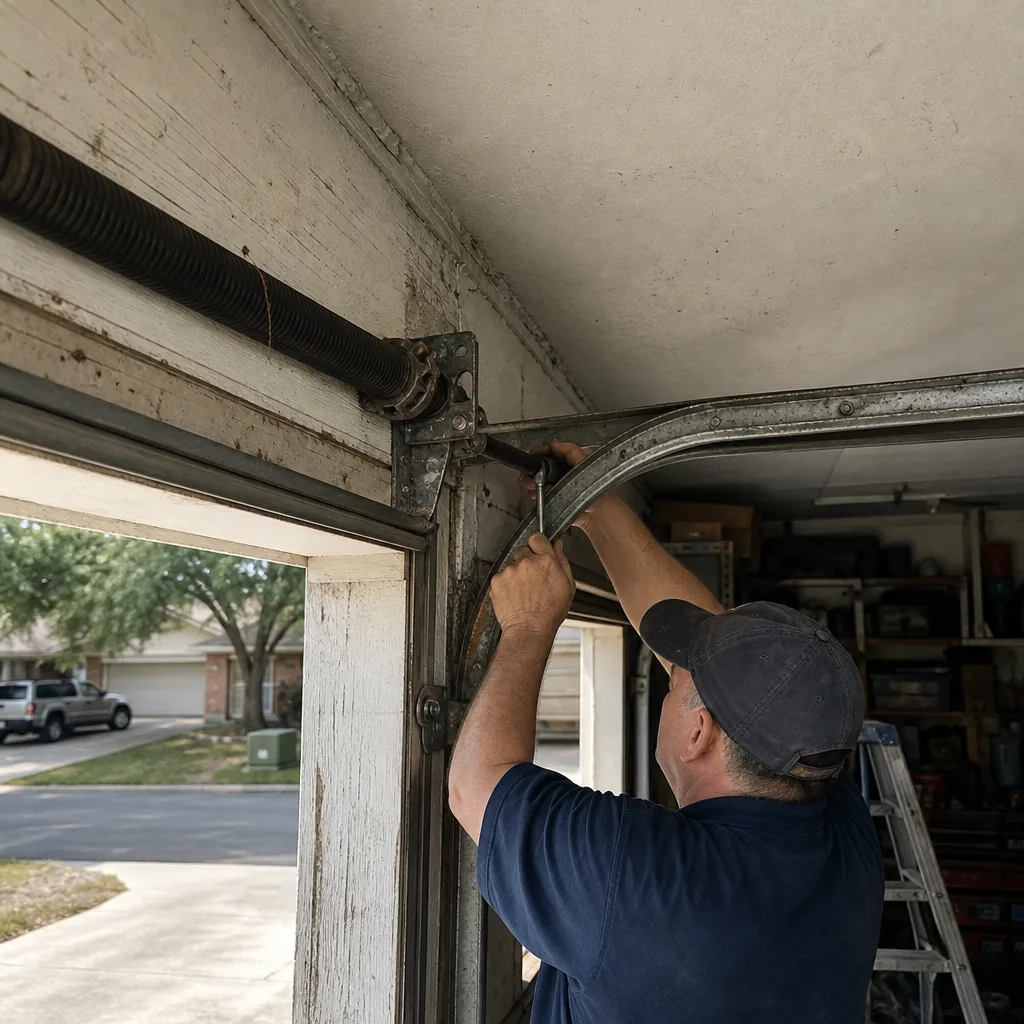
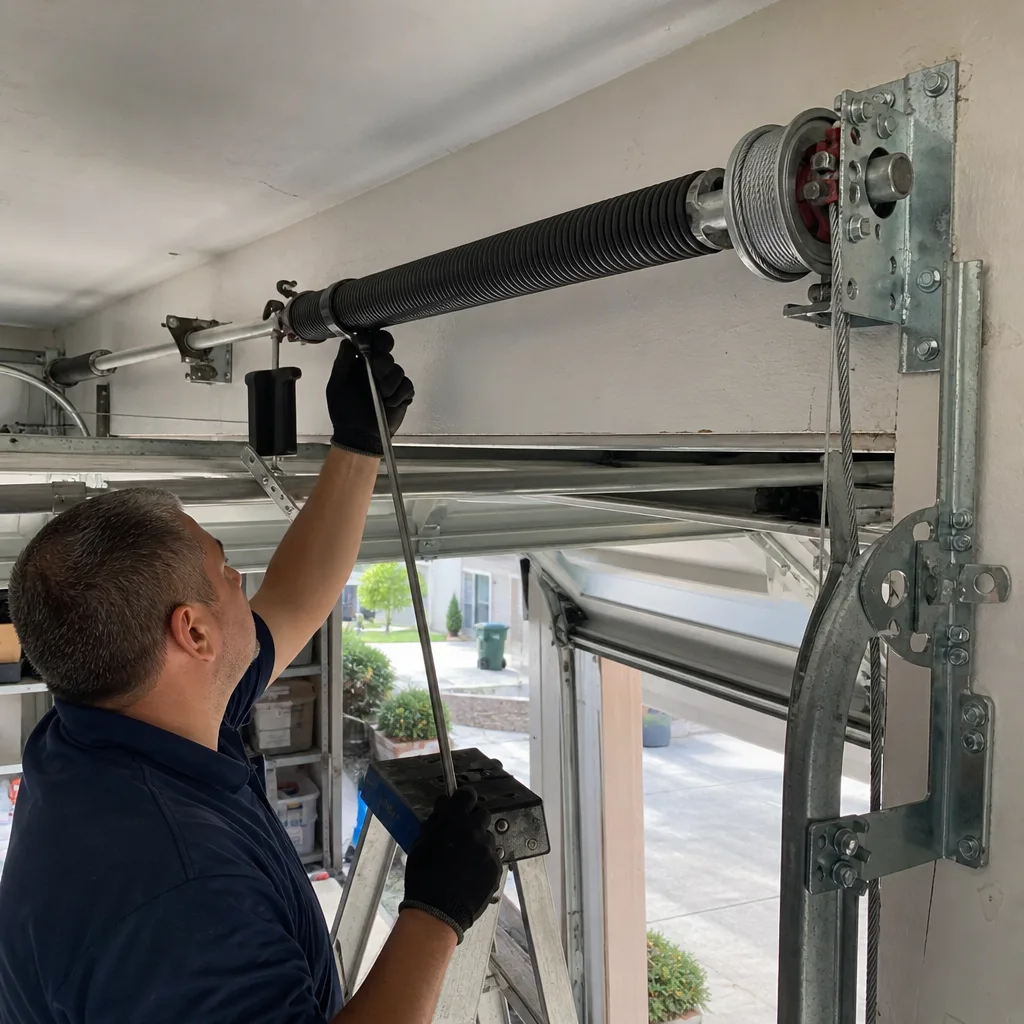
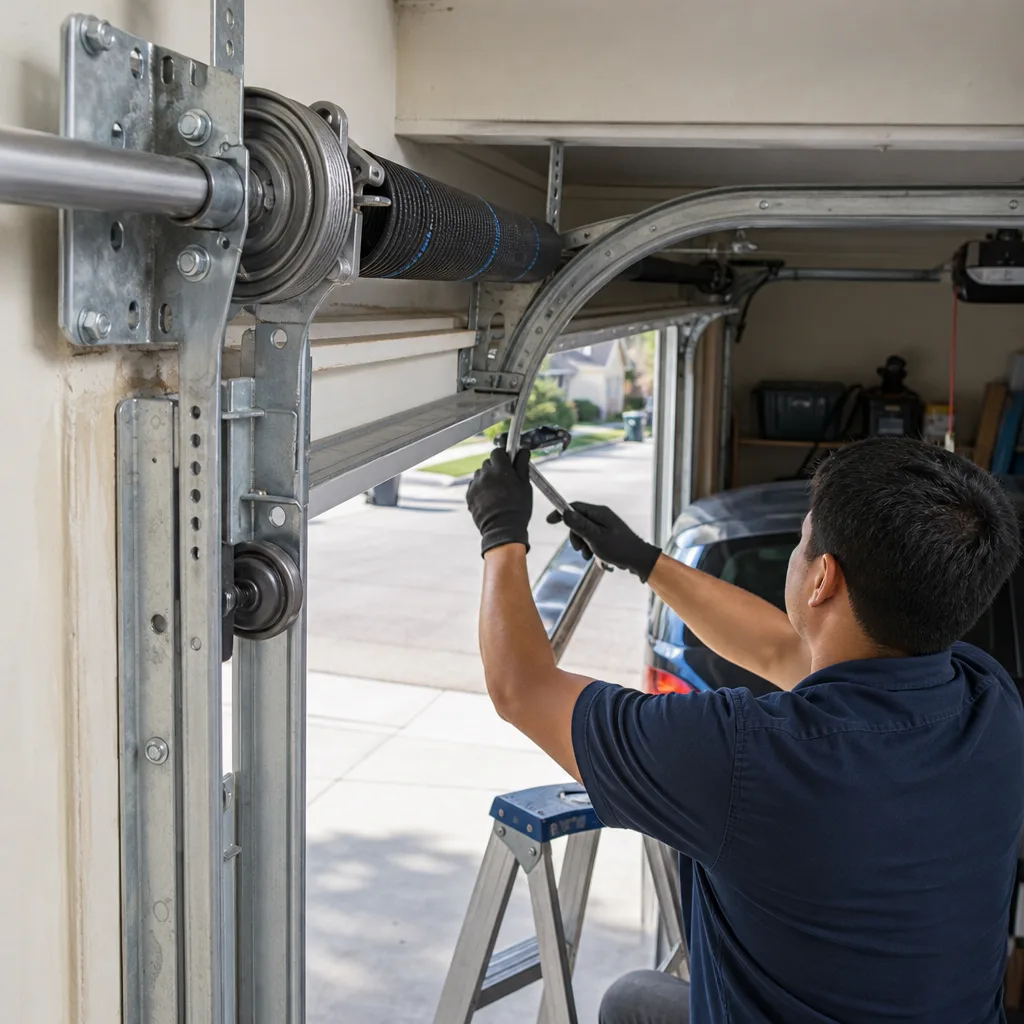
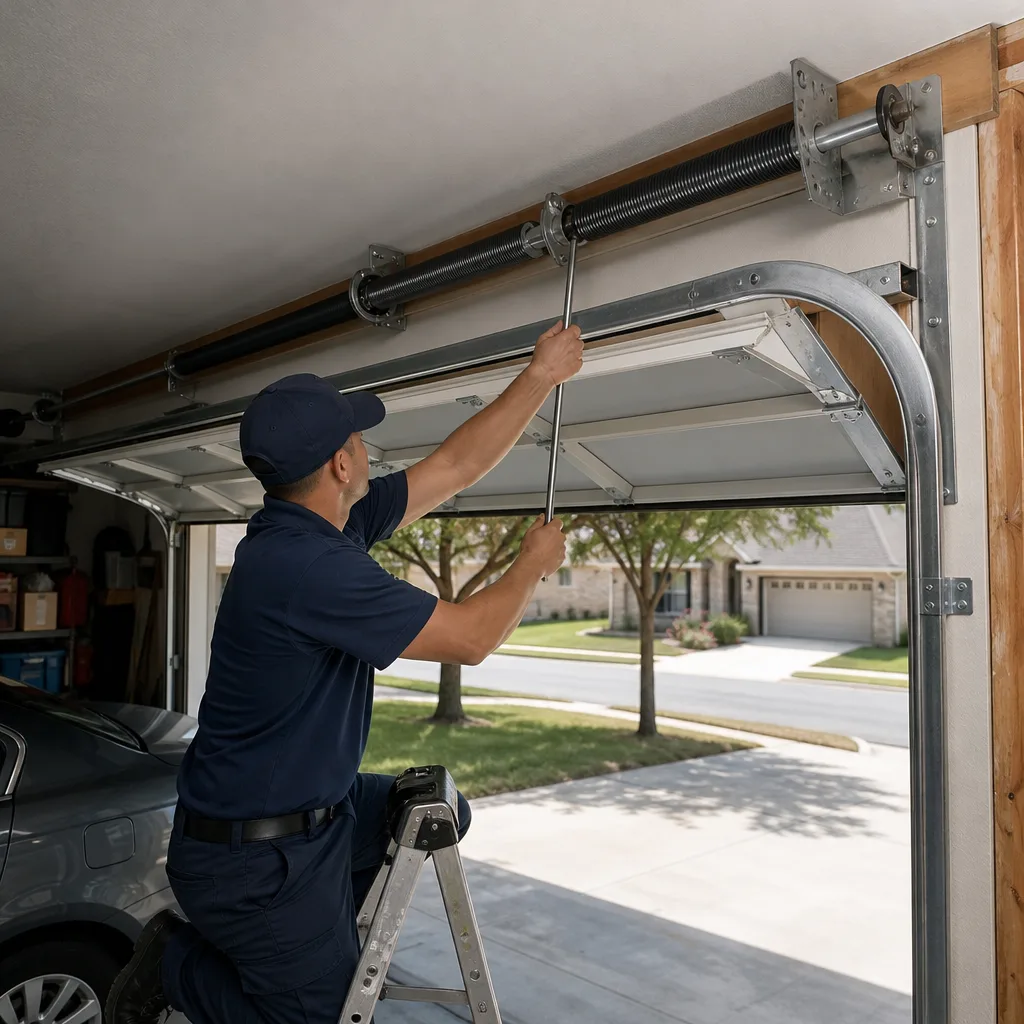
A torsion spring is the horizontal coil above your door that does most of the lifting. It stores mechanical energy under tension, and when it fails, it fails violently. In our 20-plus years in San Antonio, we have seen a broken spring crack a car windshield in a driveway in Helotes. This is not a “schedule it for next week” repair.
The warning sign that matters is a visible gap in the coil. Take a look at your spring right now. A healthy torsion spring is one continuous piece of coiled steel with no separation between coils. If you see a two-inch gap where the coil appears “unwound,” that spring has already failed or is actively failing. The door still opens because many doors have two springs, and one carries the load temporarily. But the remaining spring is now doing double duty, which means it will fail soon too, and when both go, the door is dead weight.
The danger sequence: one spring breaks, the second spring takes the full load, the door becomes too heavy for the opener’s safety clutch, and the door comes down hard. A 250-lb door falling from six feet hits with enough force to cause serious injury. We do not recommend any DIY repair involving torsion springs. The stored energy in a wound spring is enough to break bone. Our Garage Door Spring Repair in San Antonio service handles this as a same-day call because leaving a one-spring door in service is actively dangerous.
How to Document Warning Signs With Your Phone Before You Call
You can save time and money by documenting symptoms before you call a tech. A good 30-second video replaces five minutes of phone description and lets a pro quote more accurately before arriving. For help choosing the right professional, see our How to Hire a Garage Door Contractor in San Antonio: A Step-by-Step Guide.
- Shoot video of the door operating from inside the garage. Stand where you can see the spring, the cables, and the rollers. Open and close the door once, slowly. The camera picks up sounds your ears filter out.
- Record the hesitation. If your door pauses before moving, hold the phone on the opener motor while you press the button. The tech can hear the relay click and the motor’s response.
- Take photos of the torsion spring from two feet away. Use your flash. A clear photo of both springs, even if you are not sure what you are looking at, tells a pro whether the springs are in one piece.
- Photograph the cables where they attach to the bottom panel. The bottom bracket is where cables fail first. A photo of a frayed cable saves a diagnostic visit.
- Note the brand and model. Look at the opener’s side for the brand name. LiftMaster, Chamberlain, Craftsman, and Raynor openers all have different failure modes, and knowing the brand helps the tech bring the right parts.
This documentation habit lines up with how we work at Marlow Garage Door Repair San Antonio home. When you send photos or video before we arrive, our tech shows up knowing what to expect, which means a faster diagnosis and a written price sooner.
What Each Warning Sign Costs to Fix in San Antonio
Here is a realistic price picture for the common warning signs described above. These are San Antonio market ranges based on what we see across the city in 2025. Prices assume a standard single or double door with typical parts availability.
| Warning Sign | Typical Cause | Cost Range | If Ignored |
|---|---|---|---|
| 2-second hesitation on open | Failing start capacitor | $90-$140 | $350-$500 opener replacement |
| Grinding at top of travel | Worn or dry rollers | $80-$120 | $200+ track replacement |
| Door stops 6 inches short | Sensor misalignment or spring imbalance | $75-$150 | $180-$340 if spring involved |
| Visible gap in torsion spring | Broken spring | $150-$290 per spring | Second spring failure, door collapse risk |
| Frayed cable | Cable wear or drum misalignment | $120-$200 | Door drops, panel damage |
| Remote works outside, not inside | LED interference or logic board | $0-$180 | Opener replacement |
Pricing is always confirmed in writing before work starts. You will never see a number grow at the end of the job. For a more complete breakdown of repair costs across the city, see our Garage Door Repair in San Antonio page.
Brand-Specific Warning Patterns: LiftMaster, Chamberlain, Craftsman, and Raynor
Different opener brands fail in predictable ways, and knowing yours makes symptom interpretation easier.
LiftMaster and Chamberlain (same parent company, similar internals) most often show the hesitation-on-open symptom first. The start capacitor degrades gradually, and the hesitation gets longer each week. These two brands also have a known sensitivity to LED interference, so the remote-works-outside-but-not-inside issue is common with LiftMaster and Chamberlain units manufactured after 2012.
Craftsman openers, especially the chain-drive models from the 2000s and 2010s, tend to show gear wear as a grinding sound during the entire travel, not just at the top. The nylon drive gear inside the opener wears into a wedge shape, and the grinding gets worse over months. This is not a roller problem. If you have a Craftsman and hear grinding throughout the door’s movement, the opener’s drive gear is the likely culprit.
Raynor doors, which are common in San Antonio’s custom home market, have a reputation for solid panel construction but are sensitive to track alignment. A Raynor door that closes crooked or binds at one corner is usually telling you the track has shifted, not that the door itself has warped. Raynor panels are double-walled steel and rarely warp under San Antonio heat, which is exactly why alignment issues show up more clearly.
Homeowner Misdiagnoses We See Every Week
After two decades working on garage doors across San Antonio, the same wrong conclusions come up over and over. Knowing these will save you money.
“The opener is broken” when the spring is the problem. A door that will not open at all usually has a broken spring, not a dead opener. The opener’s motor is still working; it just cannot lift the door’s full weight without spring assistance. Replacing the opener instead of the spring is a $350 mistake.
“The remote needs new batteries” when the logic board is failing. If you replace the batteries and the problem persists within a week, the remote is fine. The opener’s receiver board is losing sensitivity. This one fools a lot of people because the remote works from the driveway but not from the kitchen.
“The track is bent” when the rollers are worn. A door that shakes on the way up usually has flat-spotted rollers, not a bent track. Tracks rarely bend unless something hits them. Rollers wear out as a matter of course, especially with the limestone dust factor we described near San Antonio’s construction corridors.
“It is just an old door” when the limit switch is mis-set. An older door that reverses or stops short often has a simple limit switch adjustment issue, not a failing door. Five minutes of adjustment fixes it.
We built our Garage Door Cable Repair in San Antonio service around correcting these misdiagnoses. Before we replace anything, we diagnose the actual mechanical cause and show you the evidence in photos and video.
Common Mistakes to Avoid
- Adding lubrication to a failing roller. Grease on a roller with a fried bearing makes the noise temporarily quieter while the roller continues to destroy the track. The bearing is sealed. Lube on the outside does nothing but trap limestone dust on the track surface.
- Continuing to use a door with one broken spring. A two-spring door with one broken spring puts the full load on the remaining spring. It fails twice as fast. Every cycle you run after noticing the gap in one spring is a cycle toward the second spring failing, and that failure is the dangerous one.
- Adjusting the travel limits yourself without checking spring balance first. If the door is unbalanced, a limit adjustment masks the symptom temporarily. The spring failure continues underneath.
- Ignoring the garage door when selling or buying a home in San Antonio. A door that hesitates on open or grinds at the top is a negotiating point for the buyer. A $100 repair before listing removes the objection. A neglected door that fails during escrow becomes a $400 surprise.
- Watching a YouTube video to replace a torsion spring. We understand the impulse. But winding a spring to the correct tension without experience is how serious injuries happen. The cost of professional spring replacement in San Antonio is less than most ER copays.
- Replacing the opener when the problem is the spring, the roller, or the sensor. This is the most expensive mistake on the list. We see it every month. The opener was fine.
- Delaying a cable repair because “the door still works.” Cables fail suddenly, not gradually. A frayed cable that works today can snap tomorrow, and when it does, the door drops on one side and bends the track, the panel, or both.
See the difference
 Before
 After
After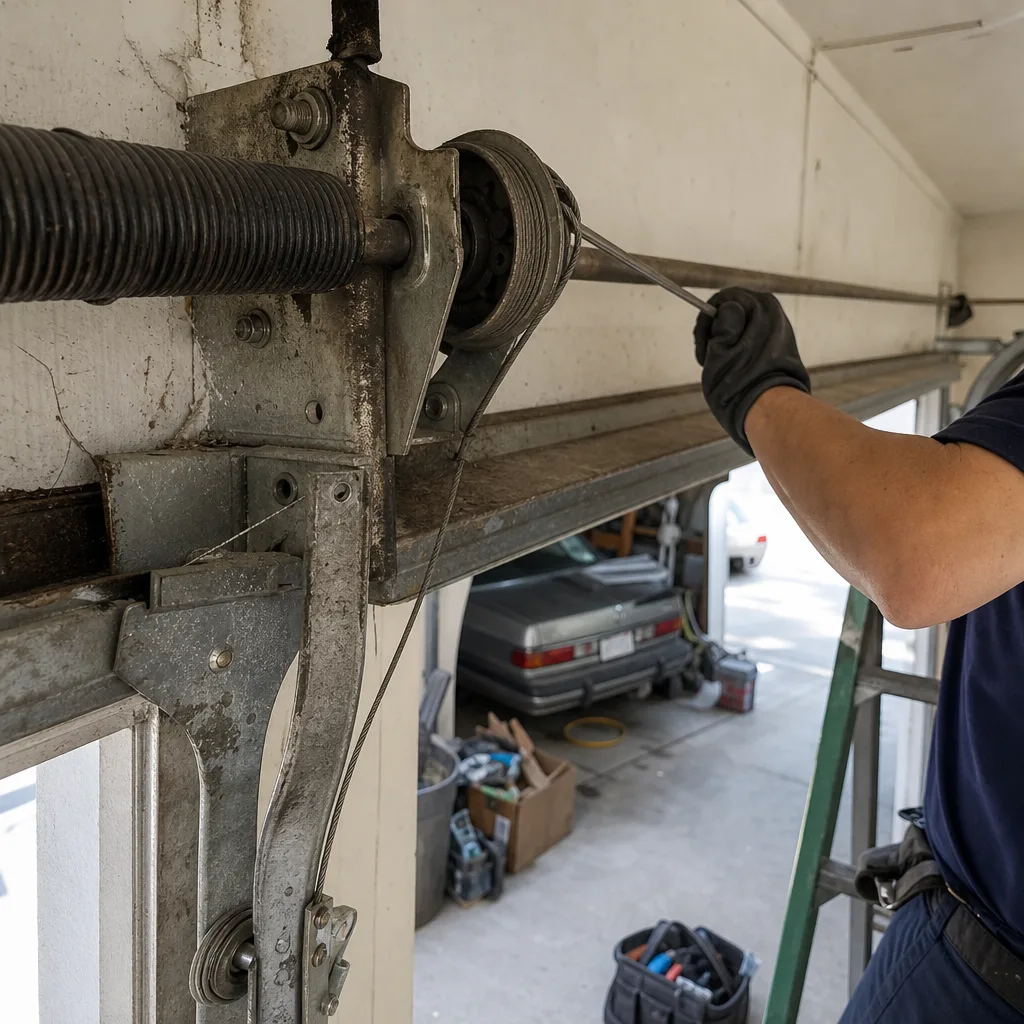 Before
 After
After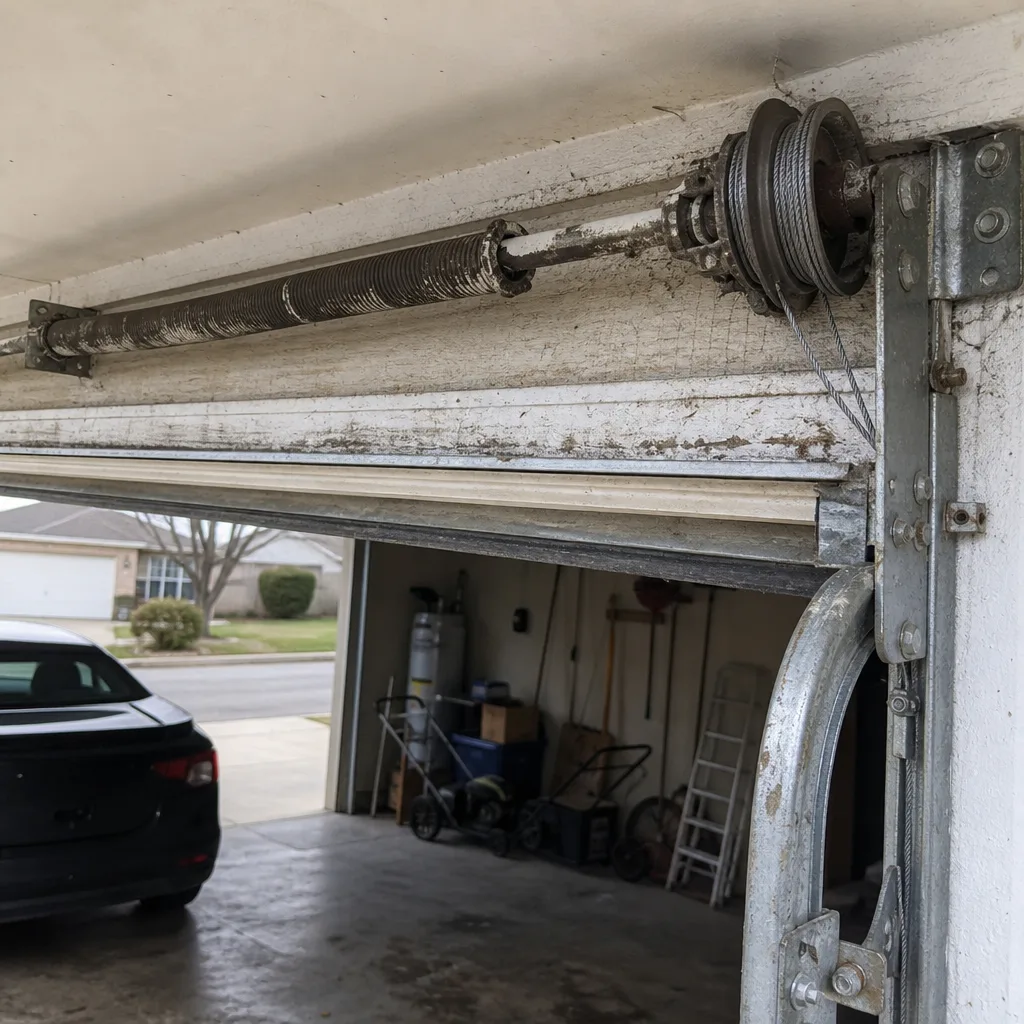 Before
 After
AfterWhen to Call a Professional
Call a pro if you see any of the stop-using-the-door signs: a gap in the torsion spring, a frayed or off-drum cable, a door that drops in your hands when you pull the release, or an opener that smells electrical. Also call if you have tried the remote fix and the hesitation persists, or if your door is closing crooked. None of these are DIY repairs, and all of them get more expensive with time. Marlow Garage Door Repair San Antonio offers free estimates in San Antonio, and we answer the phone 24/7 with a real person, day or night. Call (361) 314-2738 and describe what you are seeing. We will tell you honestly whether it is a monitor-it situation or a stop-using-the-door situation, and we will quote you a written price before any work begins.
Frequently Asked Questions
The 2-second hesitation on open is the one we see missed most often. It is subtle, it does not sound alarming, and people rationalize it as the door “just being old.” But it is almost always the start capacitor failing, and replacing it early costs under $140. Call (361) 314-2738 if you have noticed a hesitation, and we will tell you over the phone whether it matches the capacitor pattern.
If the spring is squeaking or rattling, you have time to schedule a repair within a few weeks. If the spring shows a visible gap between coils, stop using the door immediately and call for same-day service. A gap means the spring has already broken, and the remaining spring is carrying the full load.
Yes. The combination of extreme summer heat inside the garage and limestone dust from construction corridors near 1604 and 281 accelerates roller bearing wear and spring cycle fatigue. We see doors in Stone Oak and far west San Antonio reach spring replacement 2-3 years earlier than the same door models in cooler, less dusty climates.
First, check the safety sensors: make sure both lights are lit and nothing is blocking the beam. If the sensors are fine, pull the emergency release cord with the door halfway open. If the door stays put, the spring balance is fine and it is likely a limit switch adjustment. If the door drops, you have a spring problem and should call before using the door again.
Roller replacement for a standard two-car door runs $80-$120 in San Antonio, which resolves most top-of-travel grinding. If the rollers have already damaged the track, add $200 or more. The earlier you catch it, the cheaper the fix. Call (361) 314-2738 for an exact quote; estimates are free.
Yes, spring replacement is a same-day service for us across San Antonio. A broken torsion spring is the one warning sign we treat as an actual emergency because the door becomes a falling hazard. We will tell you the exact replacement cost before we start, and every spring repair is covered by our 365-Day Done Right Promise.
The Bottom Line
Your garage door talks to you, and the messages are not subtle once you know the language. A hesitation on open means a failing capacitor. Grinding at the top means worn rollers. A door that stops short and reverses means sensor or spring trouble. A gap in the torsion spring means stop using the door now. San Antonio’s heat and limestone dust accelerate every one of these, which is why local homeowners benefit from catching them early. For a deeper dive into everything covered here, read The Complete Guide to Garage Door in San Antonio. Document what you see with your phone, call a pro who will give you a written price before starting, and never run a door with a broken spring. The $80 fix today is the $400 repair in six months.
Written by Jaylen Ross, Owner at Marlow Garage Door Repair San Antonio, serving San Antonio since 2002.