
Last updated October 16, 2026
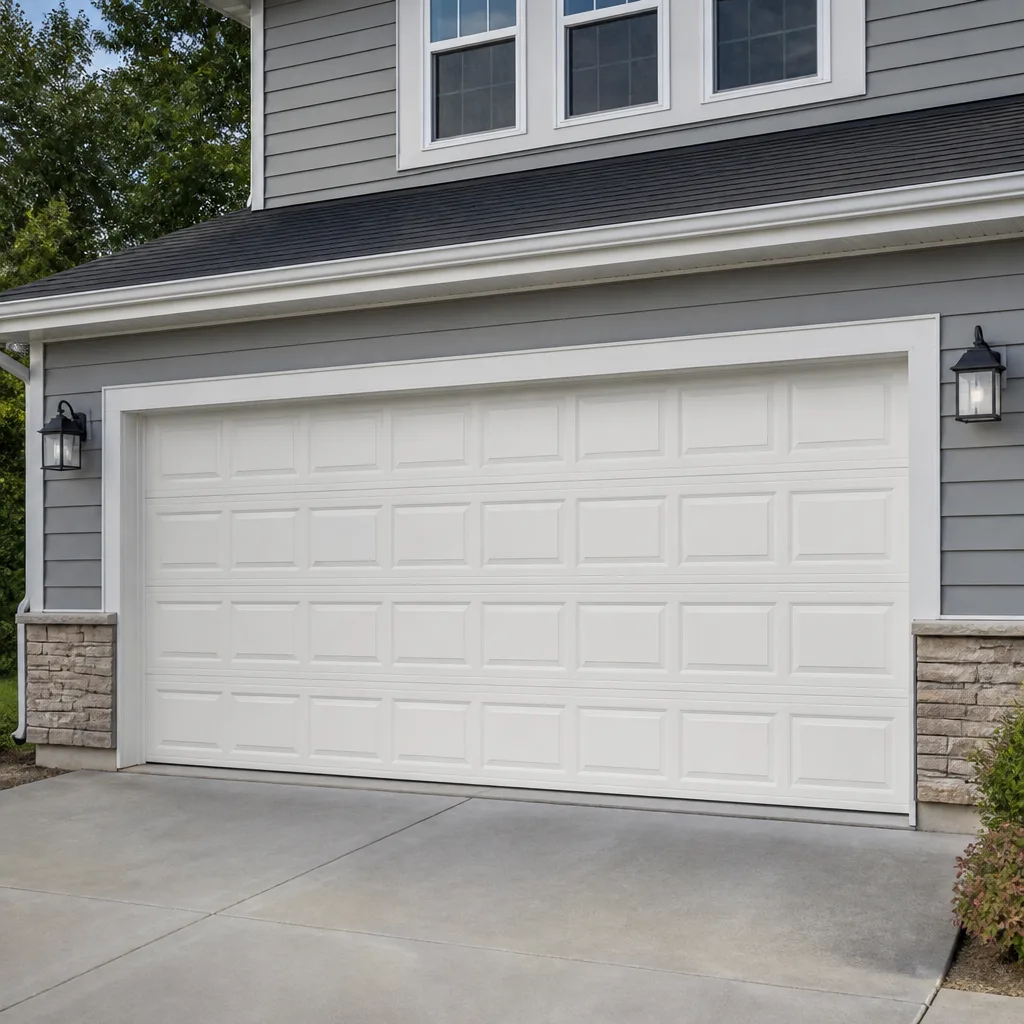 Raised-panel steel
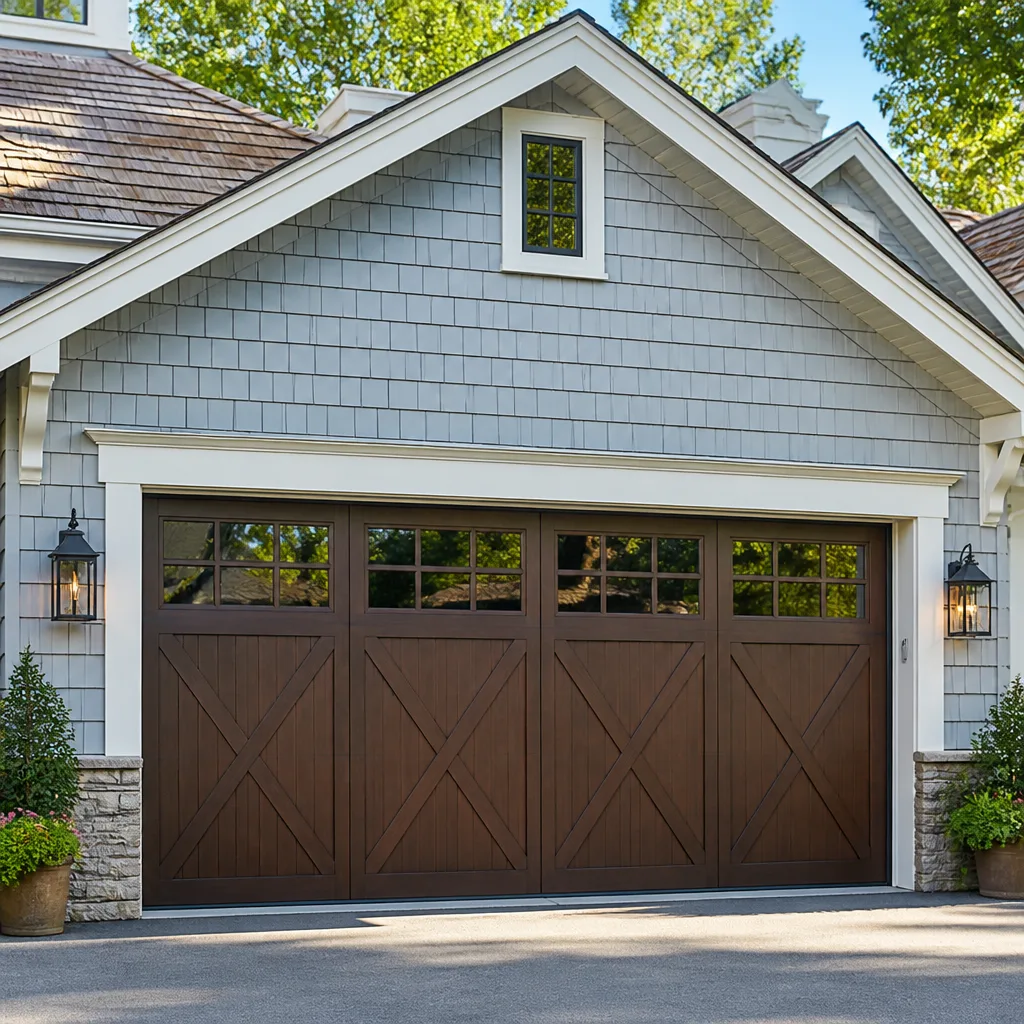 Carriage house
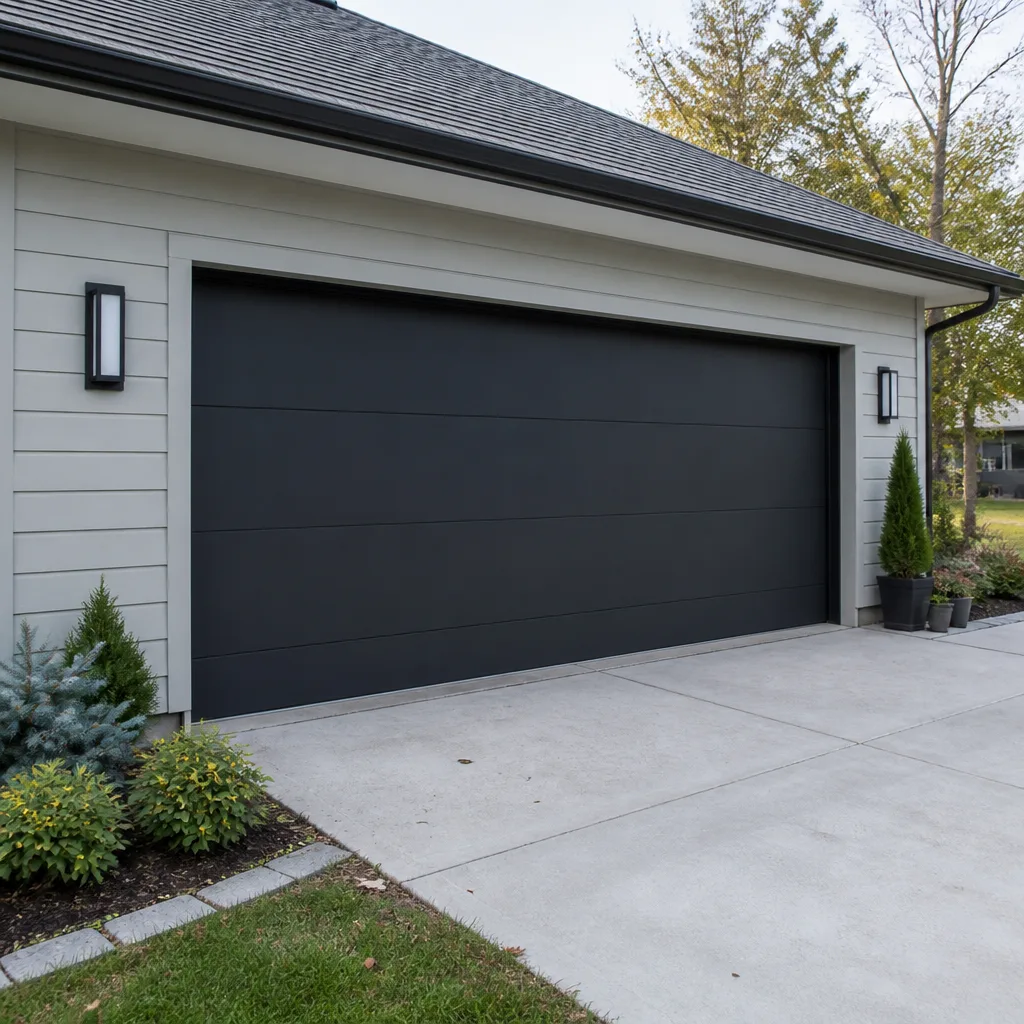 Modern flush
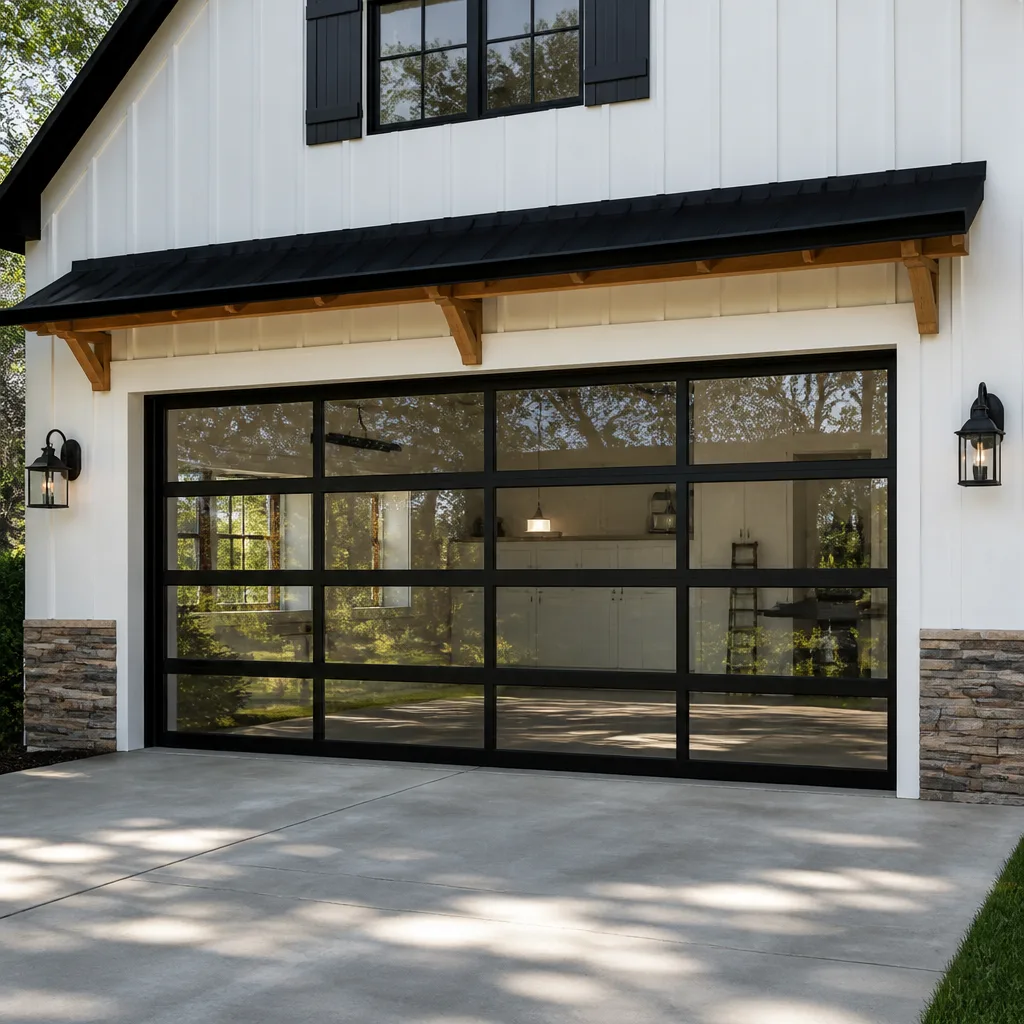 Full-view glass
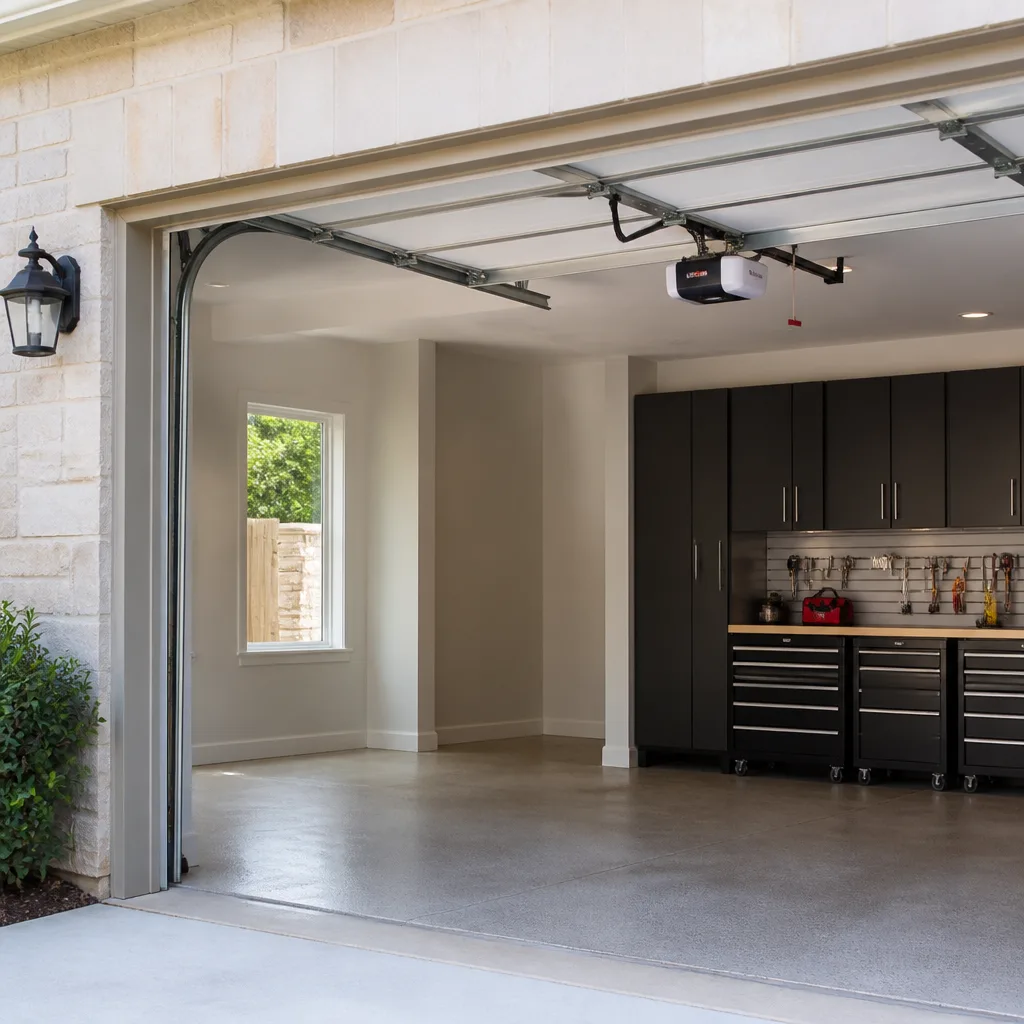 LiftMaster openers
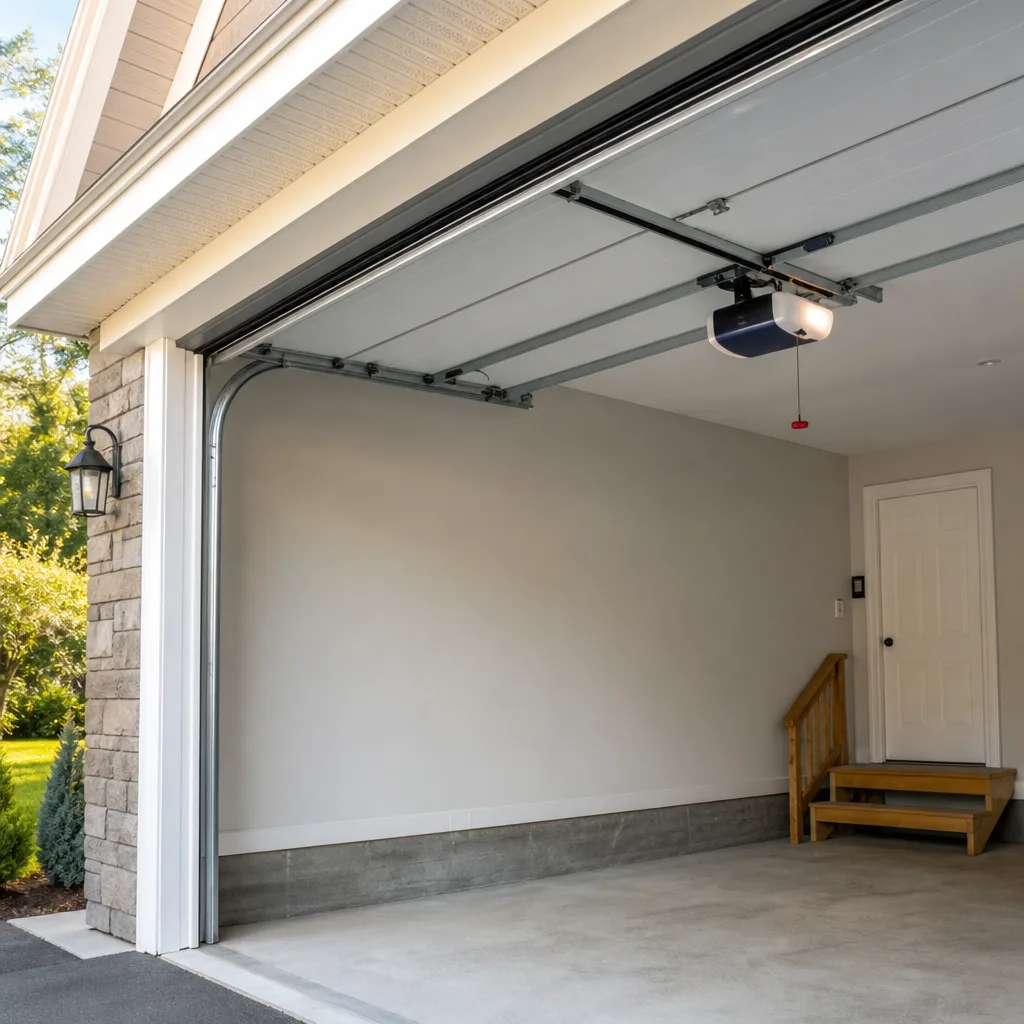 Chamberlain openers
Full 25-point door and opener safety check with every visit - springs, cables, rollers, tracks, and your LiftMaster or Chamberlain opener included
You get a price before we start. It does not change when the truck arrives.
Get your free estimateSeasonal Garage Door Care for San Antonio: Year-Round Homeowner’s Guide
Nobody in San Antonio really has a four-season garage door plan, and that’s the problem. We don’t get the kind of winter that justifies snow-rated seals or salt-resistant rollers. What we get is worse in its own way: 100-degree days that bake springs until they snap, sudden Hill Country wind events that turn a worn cable into a liability, and February nights that freeze a garage door to its tracks just often enough to matter. February 2021 proved that homeowners who thought “it never gets that cold here” were wrong in the most expensive way possible. Frozen springs and cracked panels showed up in neighborhoods from Alamo Heights to Stone Oak that hadn’t seen a service call in decades. This guide covers what actually matters for a garage door in Bexar County, broken into the three seasons San Antonio genuinely has: summer heat, storm season, and a short winter that punishes neglected doors. For a deeper look at costs and what to expect, see our Garage Door Cost Breakdown: The San Antonio Homeowner’s Reference for 2026s. You’ll get specific checks, realistic costs, and the one 30-second test you should do every month regardless of weather.
Styles & brands we work with
Quick Answer
Seasonal garage door maintenance in San Antonio means treating the year as three phases: summer heat (May through September), storm season (March through June, plus hurricane-related wind events into fall), and a short winter window (December through February). The core tasks are lubricating rollers and hinges twice a year, testing the auto-reverse sensor monthly, checking weather seals before storm season and winter, and having a professional inspect torsion springs before summer heat fully sets in. Most seasonal maintenance takes under 30 minutes per season and costs nothing except the price of a can of white lithium grease, which runs about $7 at any San Antonio hardware store.
Table of Contents
- San Antonio’s Three-Season Garage Door Reality
- Summer Heat: Your Door’s Hardest Season
- Storm Season: Hail, Wind, and What to Check First
- Winter Prep: The Right Amount for a San Antonio Freeze
- The 30-Second Auto-Reverse Test You Should Do Every Month
- Lubrication: The One Maintenance Task That Prevents Most Repairs
- Weather Seals and Insulation: Why They Fail Early in San Antonio
- Common Mistakes to Avoid
- When to Call a Professional
- Frequently Asked Questions
- The Bottom Line
San Antonio’s Three-Season Garage Door Reality
Most garage door maintenance guides are written for places like Cleveland or Minneapolis, where you winterize in October and de-winterize in April. San Antonio doesn’t work that way. Bexar County’s climate creates three distinct stress periods for a garage door, and they each require different attention. For The Complete Guide to Garage Door in San Antonio, see our full resource.
Summer heat (May through September): This is the most destructive season for garage door springs. A standard torsion spring is rated for roughly 10,000 cycles, and that rating assumes moderate temperatures. When the inside of a San Antonio garage hits 110 or 120 degrees during an August afternoon, the metal in your spring expands and contracts daily. Over the course of a single summer, that thermal cycle fatigues the spring faster than a full year of cool-weather operation. This is why we see a noticeable spike in spring failures in late August and early September – the springs have been cooking for four months straight. If your door is over 7 years old and has never had the springs replaced, summer is the most dangerous time to ignore it.
Storm season (March through June, plus residual wind events into fall): San Antonio’s severe weather is less predictable than anywhere else in Texas. We get hailstorms that can dent a steel door in minutes, and we get derecho-style straight-line wind events that push against a closed door with enough force to pull cables off their drums. The two threats require different prep, which we’ll get into below.
Winter (December through February): San Antonio winter is brief but not harmless. The city averages about 10 nights below freezing per year, and when a hard freeze does hit, it usually catches a garage door mid-cycle – meaning the door is partway open when ice forms on the tracks. That’s how rollers get frozen in place and weather seals crack. You don’t need a Minnesota-style winterization regimen, but you do need to do a few targeted things before the first real freeze arrives. Marlow Garage Door Repair San Antonio home page has details on our full service area if you want to know which neighborhoods we cover directly.
Here’s the framework in plain terms:
- May through September: Heat is your enemy. Focus on spring condition, lubrication, and thermal binding.
- March through June: Storm prep matters most. Focus on cable condition, weather seals, and door balance.
- December through February: Freeze readiness. Focus on rollers, track ice, and seal flexibility.
- Year-round, every month: The auto-reverse sensor test. It takes 30 seconds and protects everyone who uses your garage.
We’ve been repairing garage doors in San Antonio since 2002, and the pattern is consistent every single year. The homeowner who spends 20 minutes per season on basic checks winds up with a door that lasts 15 to 20 years. The homeowner who ignores it until something breaks winds up replacing the same door in 8 to 10. The difference is not luck – it’s timing. If you’re weighing whether to tackle repairs yourself, our DIY vs Professional Garage Door: The San Antonio Homeowner’s Decision Guide can help.
Summer Heat: Your Door’s Hardest Season
San Antonio summer temperatures routinely climb past 100 degrees, and the inside of an uninsulated garage runs 15 to 25 degrees hotter than the outside air. That’s 125 degrees on an August afternoon in a garage in Helotes or Converse. For the metal components of a garage door, that sustained heat does three specific things.
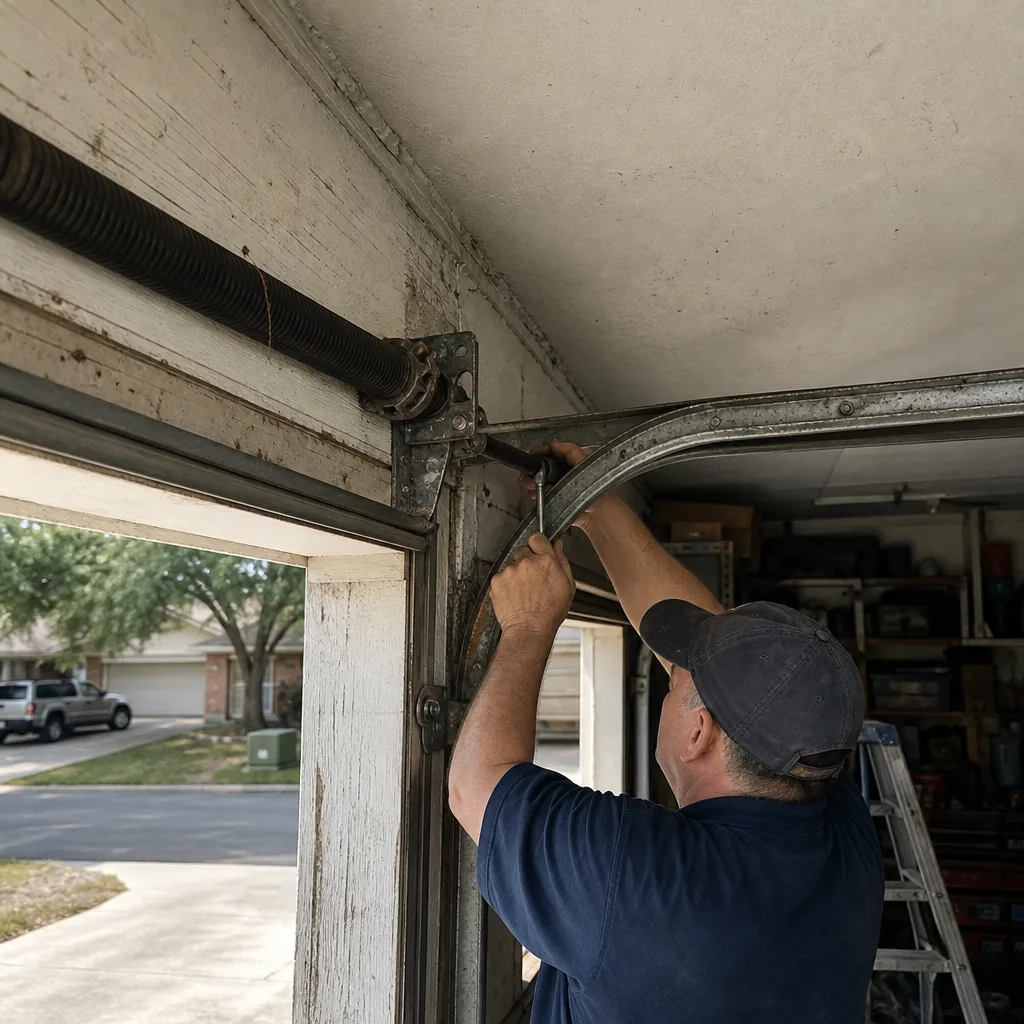
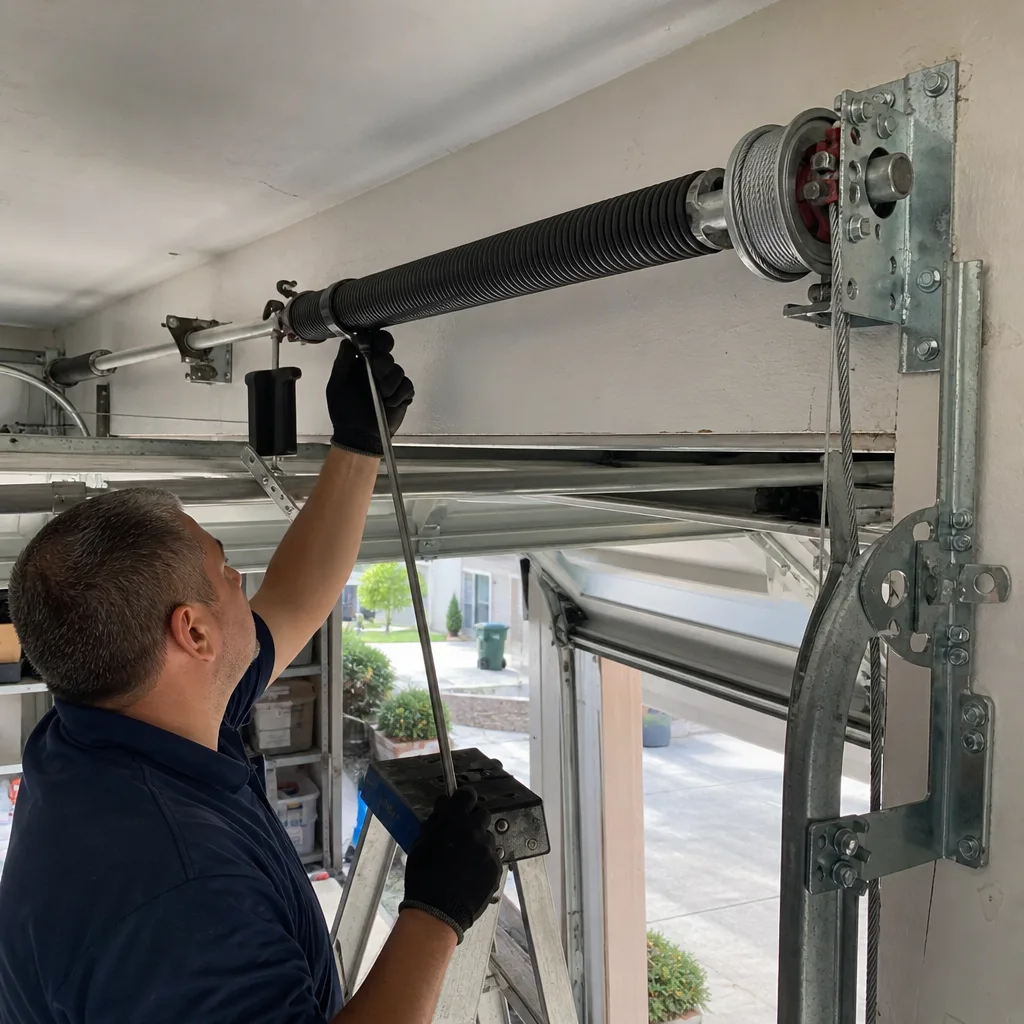
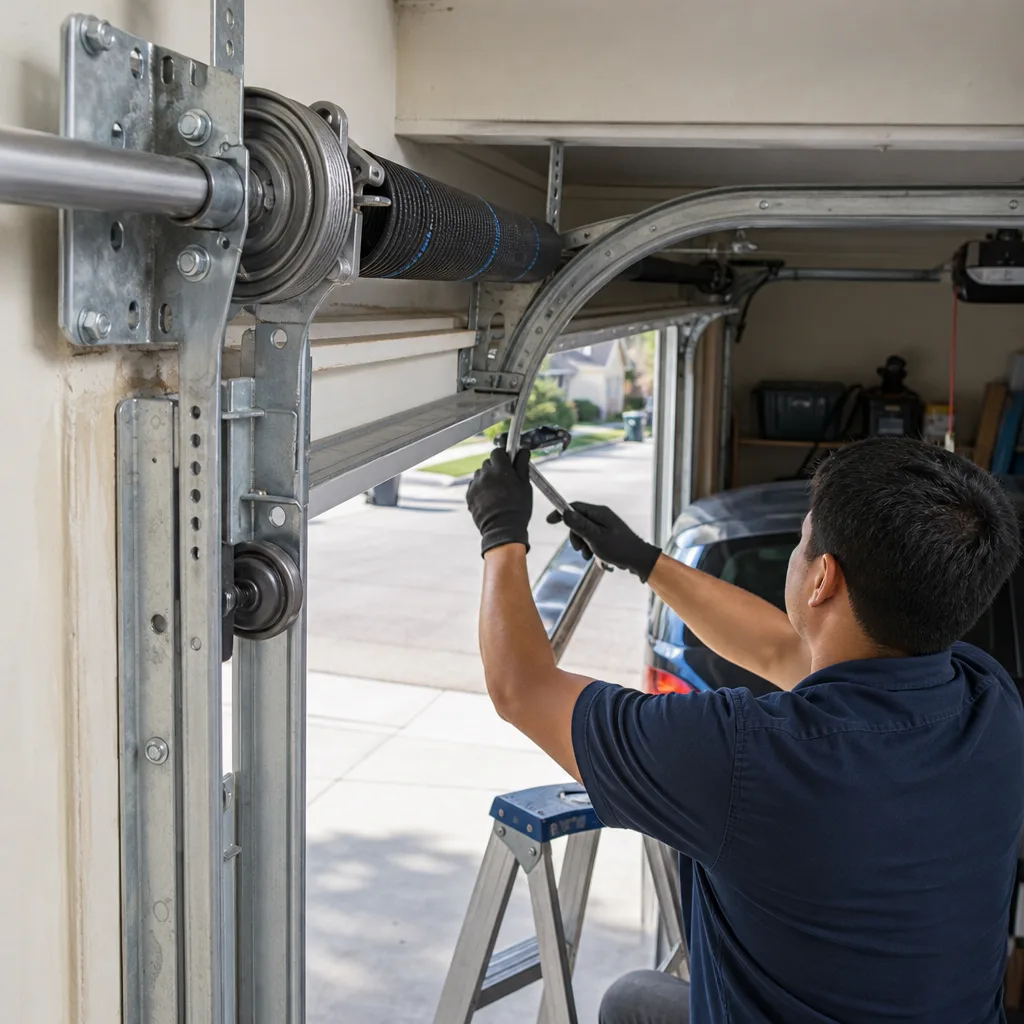
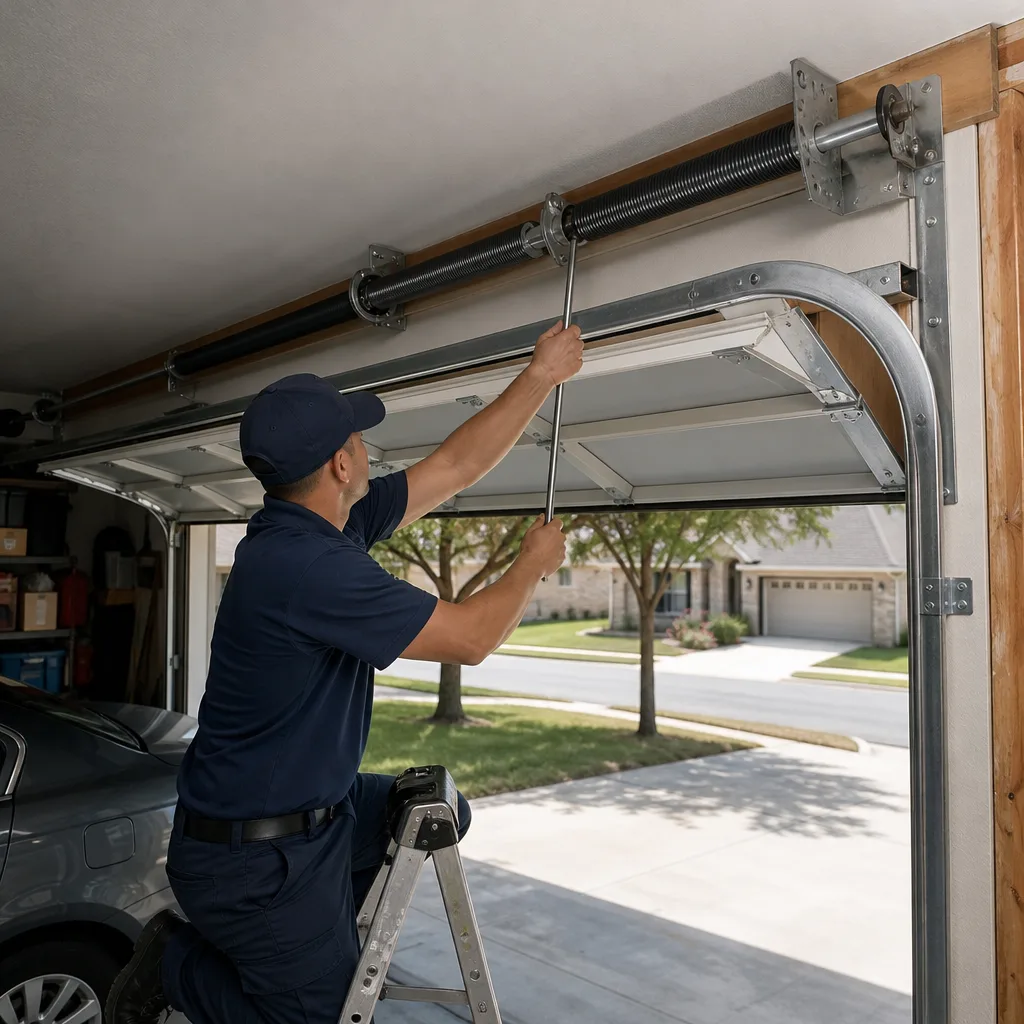
First, it accelerates spring fatigue. Torsion springs – the horizontal coils above your door that do most of the lifting – are under constant tension. Heat causes the spring’s steel to expand during the day and contract at night. Over hundreds of daily cycles, this thermal cycling creates microscopic fractures in the spring. Those fractures eventually become a full snap, usually when you’re pulling into the driveway at 6:15 p.m. on a Tuesday. We replace more broken springs in September than any other month of the year, and heat fatigue is the direct cause.
Second, heat causes the door itself to expand, which can create binding. Steel and aluminum panels expand slightly when hot, and if your door is already close to the edge of its track tolerance, a 120-degree afternoon can make it stick or grind. You’ll notice it as a door that opens fine in the morning but seems sluggish or jerky in the late afternoon. That’s thermal expansion at work, not your imagination.
Third, heat dries out the lubrication in rollers, hinges, and the drive system. Lubricant that would last six months in Chicago evaporates or degrades in half that time in San Antonio. The result is a door that gets louder as the summer goes on and puts extra strain on every moving part.
What to do in summer:
- Check spring condition in early May, before the worst heat hits. Look at the torsion spring above your door. If you see gaps in the coil, rust, or if the spring looks stretched, call for an inspection. A spring that shows visible wear in May is likely to fail by September. Our Garage Door Spring Repair in San Antonio page walks through what typical wear patterns look like and what replacement costs in Bexar County.
- Lubricate moving parts every 60 to 90 days during summer, not the standard 6-month interval. More detail in the lubrication section below, but the short version: heat speeds up lubricant breakdown, so a summer door needs more frequent attention.
- Check for thermal binding. Open and close the door at 8 a.m. and again at 4 p.m. on the same day. If the door behaves noticeably worse in the afternoon heat, it’s expansion-related binding. The fix is usually a track adjustment, which is a quick professional job, not a DIY project.
- Don’t defer spring replacement until fall. This is the classic San Antonio mistake. The thinking goes: “It’s holding, so I’ll deal with it in October.” Then the spring snaps on the hottest day of August, when your garage is unusable and you can’t even pull the car in. If you know the spring is nearing the end of its life, replacing it in May or June avoids the worst-case scenario. Spring replacement typically runs $150 to $290 in San Antonio, depending on spring type and door size. You’ll see the exact number before any work starts.
Storm Season: Hail, Wind, and What to Check First
Bexar County gets two very different kinds of severe weather, and a garage door responds to each very differently. Understanding the distinction tells you what to check and when.
Hailstorms: San Antonio hail can run from pea-sized to golf-ball-sized, and it has dented thousands of garage doors across the city. Steel doors, especially single-layer, non-insulated doors, dent easily under golf-ball hail. Insulated steel doors with a polyurethane core resist dents much better. Aluminum doors dent more easily than steel. But hail damage is cosmetic, not structural. A dented door still opens and closes fine, unless the hail was large enough to break window panels or damage the track. Your prep before a hailstorm is mostly about knowing what you have. If you have a single-layer steel door and a forecast calls for large hail, parking your vehicles nose-in and keeping the door closed is the best protection. You can’t prevent hail dents on an existing door, but you should know which doors resist them when it’s time to replace.
Straight-line wind events: Texas derecho events are less famous than hurricanes but more damaging to garage doors in San Antonio. A derecho produces sustained straight-line winds of 60 to 90 mph over a large area, usually for 20 to 40 minutes. For a garage door, that’s a massive lateral load pushing against the door face. A well-balanced, properly tensioned door will absorb that load. A door with a worn cable or a spring that’s lost tension will flex, and flexing under wind load is how cables jump their drums and doors come off their tracks. Wind damage to garage doors in San Antonio is almost always preceded by a pre-existing mechanical issue. The wind didn’t break a healthy door – it exposed a weakened one.
Pre-storm checklist (March and April, then again before any severe weather forecast):
- Test door balance. Pull the emergency release cord and manually lift the door halfway. A properly balanced door will stay in place. If it drops or shoots upward, the spring is losing tension, and the door is vulnerable to wind damage. Call a professional before the storm system arrives. Our Garage Door Repair in San Antonio service covers balance correction and spring tension adjustment.
- Inspect cables visually. The cables are the twisted steel wires running vertically on each side of the door. Look for fraying, rust, or any strand separation near the bottom roller bracket. A frayed cable under wind load is a failure waiting for a bad forecast. If you see damage, don’t wait – cable replacement is one of the most urgent repairs there is. The Garage Door Cable Repair in San Antonio page explains what a failing cable looks like and how quickly it should be addressed.
- Check weather seals. The rubber seal along the bottom of the door and the vinyl trim around the sides are what keep wind-driven rain and debris out of your garage. Walk the perimeter with a flashlight and look for cracks, gaps, or places where daylight comes through. Hail and high wind turn major water intrusion into a much bigger problem than a wet floor.
- Secure loose items in and around the garage. A derecho doesn’t just threaten the door itself. Loose items inside the garage become projectiles, and a garbage bin or tool cart thrown against the door can dent or damage panels. This one takes five minutes and costs nothing.
Winter Prep: The Right Amount for a San Antonio Freeze
San Antonio gets roughly ten nights below freezing per year, and when a hard freeze does arrive, it’s often accompanied by precipitation. That combination – freezing temperatures plus moisture – is what damages garage doors in Bexar County. Ice forms in the tracks, rollers freeze in place, and rubber seals lose their flexibility and crack when the door moves. The goal of San Antonio winterization is not to prepare for a Minnesota winter. It’s to make sure the door survives the ten cold nights that matter without over-engineering for weather that won’t come.
Freeze-specific checks (December, before the first hard freeze forecast):
- Clear the tracks of debris and check for ice formation. Before a freeze, the tracks should be clean. Dried leaves, dirt, and spider webs are minor annoyances in October but become ice anchors in January. Wipe them out with a dry cloth. During an actual freeze, if the door is sticking, check for visible ice on the track before forcing the door. Forcing a frozen door is the fastest way to strip a gear or bend a track.
- Inspect rollers. Nylon rollers with sealed bearings handle San Antonio’s freeze-thaw cycles far better than steel-on-steel rollers. Steel rollers corrode over time, and when ice forms on a corroded roller, the door binds. If your rollers are more than 7 years old and you’re hearing grinding during a cold snap, they’re likely due for replacement. Roller replacement in San Antonio typically runs $85 to $150 for a full set, depending on door size and roller material.
- Check weather seal flexibility. The bottom seal, called the astragal, is a rubber or PVC strip running the width of the door. In cold weather, old seals become brittle. Bend the seal slightly with your hand – if it feels stiff or cracks instead of flexing, it needs replacement before a freeze, not after. A cracked seal during a hard freeze lets cold air and moisture in, and it’s a $60 to $110 fix compared to the water damage it prevents.
- Lubricate sparingly with the right product. This applies year-round but especially before winter. In freezing temperatures, WD-40 and other penetrating oils thicken and can actually gum up your door. White lithium grease is the standard for garage door tracks and rollers. A can costs about $7 at any San Antonio hardware store.
The February 2021 freeze caught San Antonio off guard in a specific way: the cold lasted long enough that ice built up on garage doors that weren’t prepared for any freeze at all. Single-digit temperatures for multiple consecutive days meant that even a small amount of moisture in a track became a permanent ice block. The lesson for San Antonio homeowners is not to install Canadian-grade cold-weather equipment. It’s to do the basic freeze checks above before the forecast turns bad, because once the cold arrives, your window to fix things has closed.
The 30-Second Auto-Reverse Test You Should Do Every Month
Every garage door opener manufactured since 1993 has an auto-reverse safety system, and it’s the single most important safety feature on the door. It’s also the one maintenance task that matters every single season, regardless of San Antonio weather. Here’s how it works: the opener has an infrared sensor positioned on each side of the door, about six inches off the ground. If anything breaks the beam between those sensors while the door is closing – a child, a pet, a bicycle – the door should automatically reverse and go back up. Most openers also have a force-reversal feature that triggers if the door hits something solid on the way down.
The 30-second monthly test:
- Open the garage door fully. Place a roll of paper towels or a 2×4 block flat on the ground directly under the door’s path.
- Close the door using the wall button or remote.
- Watch the door. It should reverse immediately upon contacting the object. If it keeps closing or makes significant contact before reversing, the auto-reverse is not working properly.
- Test the sensor beam separately. While the door is closing, wave your hand or foot through the beam between the two sensors. The door should reverse.
- Repeat monthly, or anytime you notice the door closing with unusual force.
We regularly test auto-reverse on every service call because a faulty sensor is one of the most common issues we find, and most homeowners never check it. The sensors are small enough to get knocked out of alignment by a broom, a bicycle, or a car bumper, and once misaligned, the system fails silently – the door still opens and closes, so you never know anything’s wrong. In our experience across 20-plus years in San Antonio garages, about one in five doors we service has a sensor that’s either misaligned, obstructed, or entirely non-functional. The fix is often a two-minute adjustment, but the risk of not fixing it is a door that doesn’t stop for a child. Test it monthly.
Lubrication: The One Maintenance Task That Prevents Most Repairs
If there’s a single maintenance habit that would prevent the majority of the garage door repairs we see across San Antonio, it’s lubrication. A garage door has anywhere from 12 to 20 moving parts – rollers, hinges, springs, track contact points, the opener chain or belt – and every single one of them operates under friction. In San Antonio’s heat and dust, unmaintained friction translates into worn rollers, strained springs, burnt-out opener motors, and a door that sounds like a shopping cart with a bad wheel.
What to use: White lithium grease. It’s the product recommended by every major garage door manufacturer, including LiftMaster, Chamberlain, Genie, and Wayne Dalton. It costs about $7 a can at any hardware store in San Antonio. Do not use WD-40 for garage door lubrication – WD-40 is a penetrating oil and solvent, not a lubricant, and it will strip the existing grease and make the problem worse. Do not use heavy axle grease either; it’s too thick and will gum up precision bearings and plastic components.
What to lubricate:
- Rollers: A small amount of grease on each roller’s ball bearings, where the roller meets the metal stem. If you have all-metal rollers, lubrication is even more critical.
- Hinges: The pivot points where door sections connect. Every hinge should move freely.
- Torsion spring: A thin coat along the full length of the spring. This reduces friction between the spring coils as they wind and unwind under load.
- Track contact points: A small amount where the rollers travel, but not the inside of the track itself. Over-lubricating the track attracts dirt and sand, which becomes abrasive grit.
- Opener rail or chain: A light coat on the chain drive or belt drive if your opener uses one.
How often: Twice a year is the standard, but in San Antonio’s heat, we recommend lubricating every three to four months, especially on south-facing and west-facing garages that get direct afternoon sun. The inside temperature of those garages regularly exceeds 120 degrees in summer, and lubricant breaks down significantly faster under those conditions. The brand-specific details matter less than consistency – a door that gets lubricated three times a year will outlast a door that gets premium lubricant applied once every two years, every time.
Weather Seals and Insulation: Why They Fail Early in San Antonio
San Antonio’s combination of intense UV exposure and concrete-melting summer heat means that rubber and vinyl weather seals on garage doors fail faster here than almost anywhere else in the country. The bottom seal – called the astragal – is exposed to sunlight every time the door is open, and in San Antonio that translates to hundreds of hours of direct UV each year. UV degrades rubber and PVC, causing it to become brittle, crack, and eventually fall apart. A weather seal that would last 8 to 10 years in a northern climate lasts 4 to 6 years in Bexar County, and we see seals fail even faster on west-facing garage doors that catch full afternoon sun.
Why it matters: A failed weather seal is not just about dust and water, though that’s part of it. In July, a gap under the door lets in 100-degree air, turning your garage into a convection oven and making any room above or adjacent to it harder to cool. In storm season, it lets wind-driven rain soak the garage floor and anything stored on it. In winter, it lets cold air infiltrate, and for San Antonio homes with living space above the garage, that cold air rises through the floor and taxes your heating system. A $60 to $110 seal replacement is one of the cheapest fixes with the biggest impact on garage comfort and energy use.
Signs your seal needs replacement (check quarterly):
- Daylight visible under the door when closed – kneel at the bottom and look.
- Cracks, splits, or crumbling in the rubber material.
- Flattened or deformed sections where the seal no longer makes contact with the concrete.
- Water pooling near the door during rain, even when the door is closed.
- Mice or insects consistently finding their way into the garage.
For doors that face south or west, plan on replacing the bottom seal every 4 to 5 years. For east and north-facing doors, every 6 to 7 years is typical. This is not a brand-specific problem – Wayne Dalton and Craftsman doors have the same rubber compounding issues in Texas sun as any other major brand. The material simply degrades faster in San Antonio.
Common Mistakes to Avoid
- Waiting until the door breaks to address spring wear. In San Antonio, a spring that’s visibly worn in June is likely to snap by Labor Day. By the time a broken spring strands your car in the garage, you’ve lost the chance to address it on your schedule. We recommend checking springs every spring (March-April) before the heat cycle begins.
- Using WD-40 as a lubricant. It’s the most common mistake we see, and it actively makes the problem worse. WD-40 dissolves existing lubricant and leaves metal parts unprotected. Use white lithium grease, period.
- Forcing a frozen door. When a San Antonio freeze hits and the door sticks, forcing it risks bending a track, stripping an opener gear, or snapping a cable. If the door won’t move after a freeze, check for visible ice, let the sun hit the door for 30 minutes, and try gently. If it still won’t budge, call a professional.
- Deferring spring replacement until “cooler weather.” The idea that fall is a better time to replace a spring is backward. Heat is what kills springs, so replacing before the hottest stretch of the year extends the life of the new spring. Fall replacement means the new spring has to survive the next summer’s heat from day one.
- Ignoring the auto-reverse sensor. It’s the only safety feature that protects your family and pets, and most San Antonio homeowners go years without testing it. The test takes 30 seconds and should be monthly.
- Treating storm prep as an October-only task. San Antonio’s severe weather season runs from March through June, with derecho and hail risk extending into fall. If you only think about storm prep when hurricane season peaks, you’ve missed the window for the storms that actually hit Bexar County.
- Replacing the whole opener before checking the sensor or the photo eye. We get calls all the time from homeowners who assume their opener is dead when the door won’t close. Often the fix is a misaligned sensor or a spider web over the photo eye lens. Diagnose before replacing.
When to Call a Professional
Some garage door work is doable on your own – lubrication, seal inspection, sensor testing – and some absolutely is not. Torsion springs are under enough tension to cause serious injury to anyone who attempts removal without the proper training and winding bars. Cables operate under similar tension and are just as dangerous. If you see a broken spring, a frayed cable, a door off its track, or an opener that’s stripped its gear, do not attempt the repair yourself. The risk of injury is real, and the cost of a professional repair is less than the medical bill or the additional damage a botched DIY job will cause. If you’re in San Antonio and you’ve noticed a door issue during any of the seasonal checks above, Marlow Garage Door Repair San Antonio offers free estimates with written pricing before any work begins. Call (361) 314-2738.
Frequently Asked Questions
Seasonal maintenance in San Antonio works best on a three-phase schedule: lubricate moving parts every 3 to 4 months, perform a full visual inspection (springs, cables, seals, tracks) in March before storm season and again in May before summer heat, and do a freeze-readiness check in early December. The auto-reverse sensor test should be done monthly, year-round. Most of these tasks take under 30 minutes and require only white lithium grease and a flashlight.
Spring replacement in San Antonio typically runs $150 to $290, depending on the spring type (torsion vs. extension), door size, and whether you’re replacing one spring or both. At Marlow Garage Door Repair San Antonio, every customer receives a written price before any work starts, and that price is locked – the invoice matches the quote, guaranteed. Call (361) 314-2738 for a free estimate.
Yes. During a hard freeze, moisture in the tracks or on the rollers can form ice, which then freezes the door in place. This is most common during freezes accompanied by precipitation, like the February 2021 event. If your door is frozen, do not force it – let the sun warm the area for 30 to 60 minutes, then try gently. Forcing a frozen door can bend the track or strip the opener gear.
Before severe weather, test your door’s balance by pulling the emergency release and manually lifting the door halfway. If it doesn’t stay in place, call for a spring adjustment before the storm – an unbalanced door is much more vulnerable to wind damage. Inspect cables for fraying, check that weather seals are intact, and clear loose items from around the door. A healthy, balanced door handles San Antonio wind events well; a weakened one won’t.
A professional tune-up in San Antonio typically runs $75 to $150, depending on the provider and what’s included. A proper tune-up covers spring tension adjustment, cable inspection, roller and hinge lubrication, track alignment, and a full safety sensor test. Marlow Garage Door Repair San Antonio provides free estimates on all service calls, including tune-ups, with written pricing before work begins. Call (361) 314-2738 to get your exact number.
A standard torsion spring is rated for approximately 10,000 open-and-close cycles, which translates to roughly 7 to 10 years for a typical San Antonio household with one to two users per day. However, the extreme summer heat in Bexar County accelerates spring fatigue, and we regularly see springs fail at the 6 to 8 year mark. Two-car households or homes with garage apartments may see failure even sooner. If your springs are over 7 years old and you’ve never had them replaced, a professional inspection in spring is worth the peace of mind.
The Bottom Line
San Antonio’s garage doors face a specific set of challenges: brutal summer heat that fatigues springs faster than anywhere else, a storm season defined by hail and straight-line wind, and a short but genuinely damaging winter freeze window. The homeowners who avoid major repairs are the ones who treat maintenance as a three-season habit, not a four-season checklist from a northern climate. Lubricate every 3 to 4 months with white lithium grease. Test your auto-reverse sensor monthly. Check springs in May, cables in March, and seals in December. And when something’s wrong, get a written price before any work starts – you should never face a bill that surprises you. If a seasonal check uncovers something you’d rather not handle alone, call Marlow Garage Door Repair San Antonio at (361) 314-2738 for a free estimate. We’ve been serving San Antonio since 2002. For more guides & resources, visit our blog.
Written by Jaylen Ross, Owner at Marlow Garage Door Repair San Antonio, serving San Antonio since 2002.
See the difference
 Before
 After
After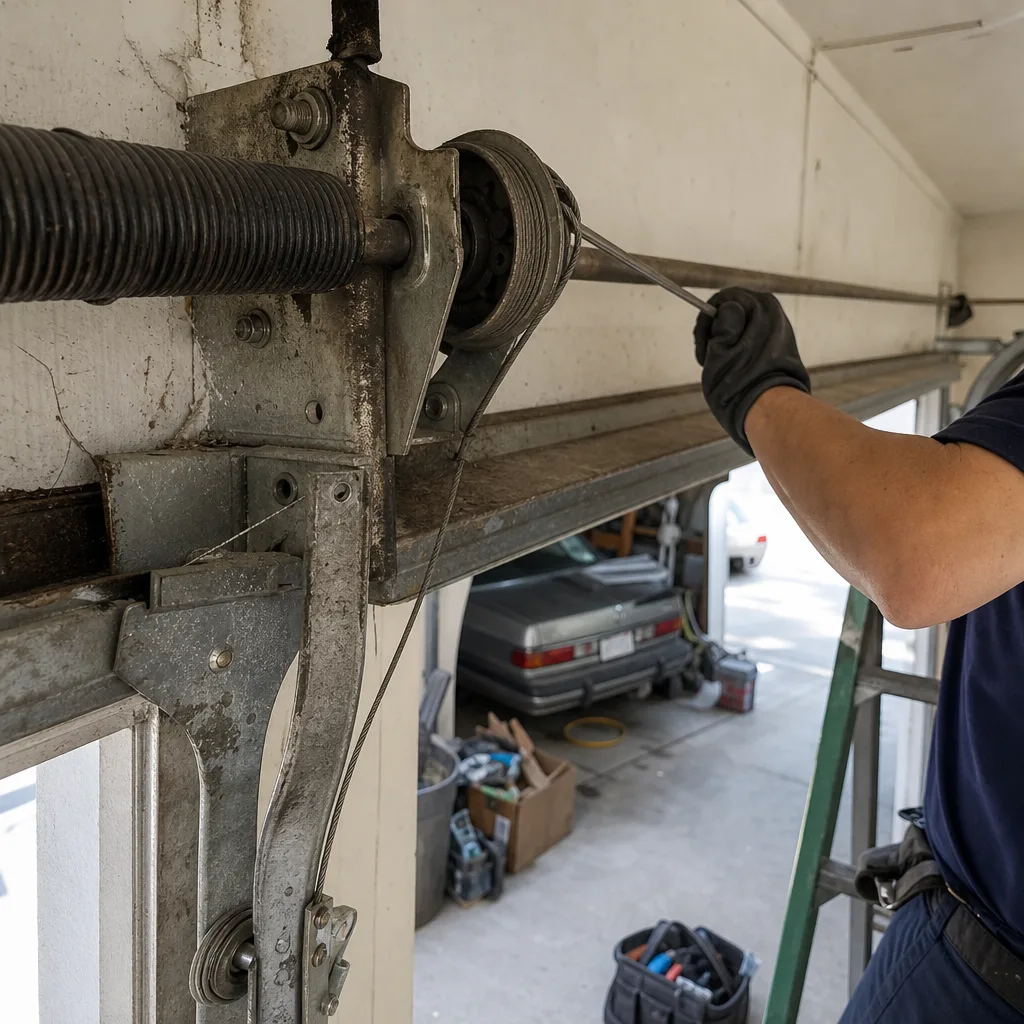 Before
 After
After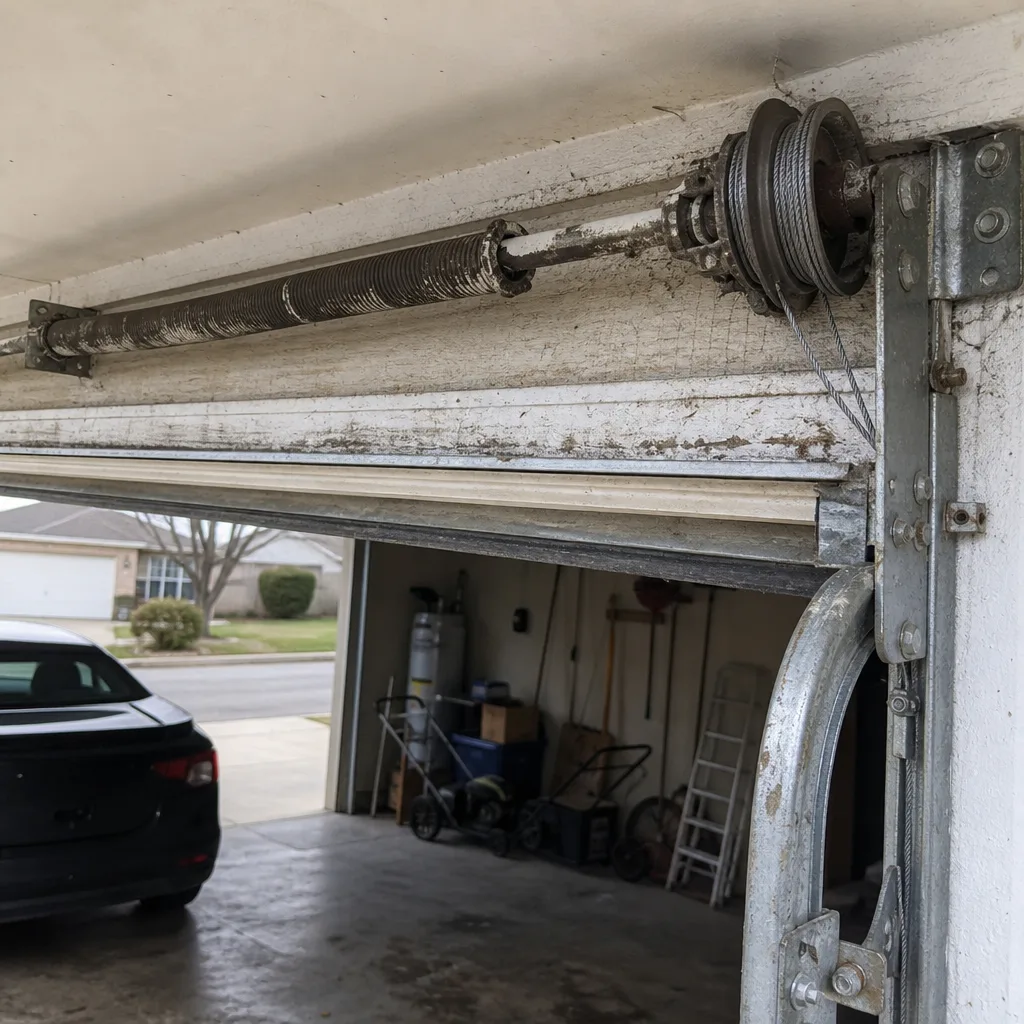 Before
 After
After